CRO Agency vs Doing It Yourself: How to Actually Make the Right Call

@nadolconverts
Kacper Nadol
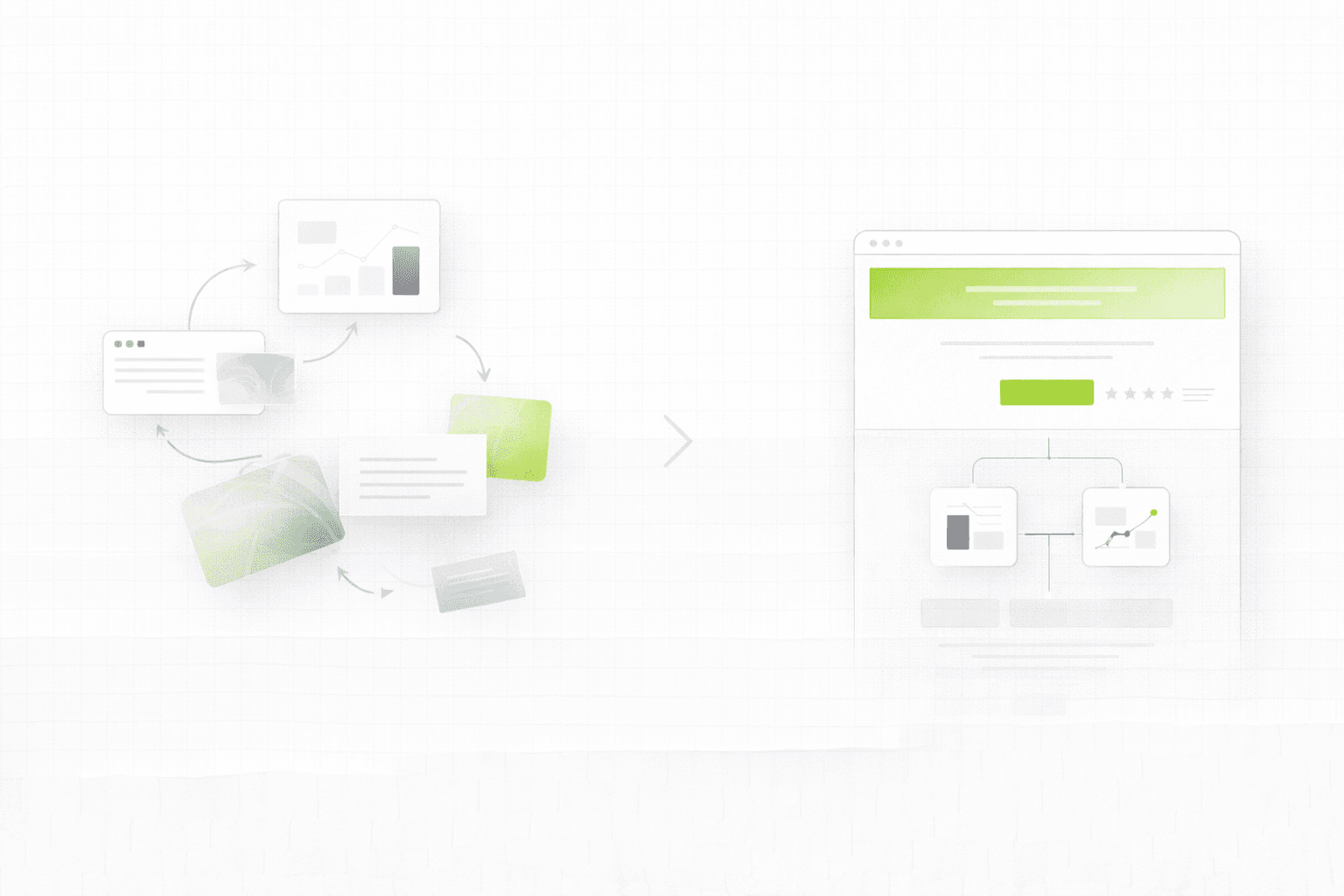
Hiring a CRO agency sounds like the obvious move when your site is underperforming. But it is not always the right one. This article breaks down when it makes sense to bring in outside help, when it does not, and what to look for if you do decide to hire.
Why This Decision Is Harder Than It Looks
On the surface, the question seems simple. Your website is not converting well enough. You either fix it yourself or you pay someone to fix it for you. Pick one.
The reality is messier. Doing it yourself can mean anything from making a few copy tweaks to running a full structured optimization program. Hiring an agency can mean anything from a one-time audit to a six-month retainer with weekly testing cycles. The gap between what you actually need and what either option delivers is where most of the money gets wasted.
The decision also tends to get made at the wrong moment. Either someone is frustrated enough to outsource immediately without thinking through whether the agency they are hiring actually solves the specific problem, or someone keeps insisting they will handle it internally while months pass and nothing changes. Neither approach is especially rational. Both are common.
What actually determines the right call is a combination of four things: what the problem is, what internal capacity exists to solve it, what the cost of inaction looks like, and what kind of help is actually available at a given budget.
When Doing It Yourself Makes Sense
There are situations where keeping CRO work in-house is genuinely the right answer, not just the cheaper one.
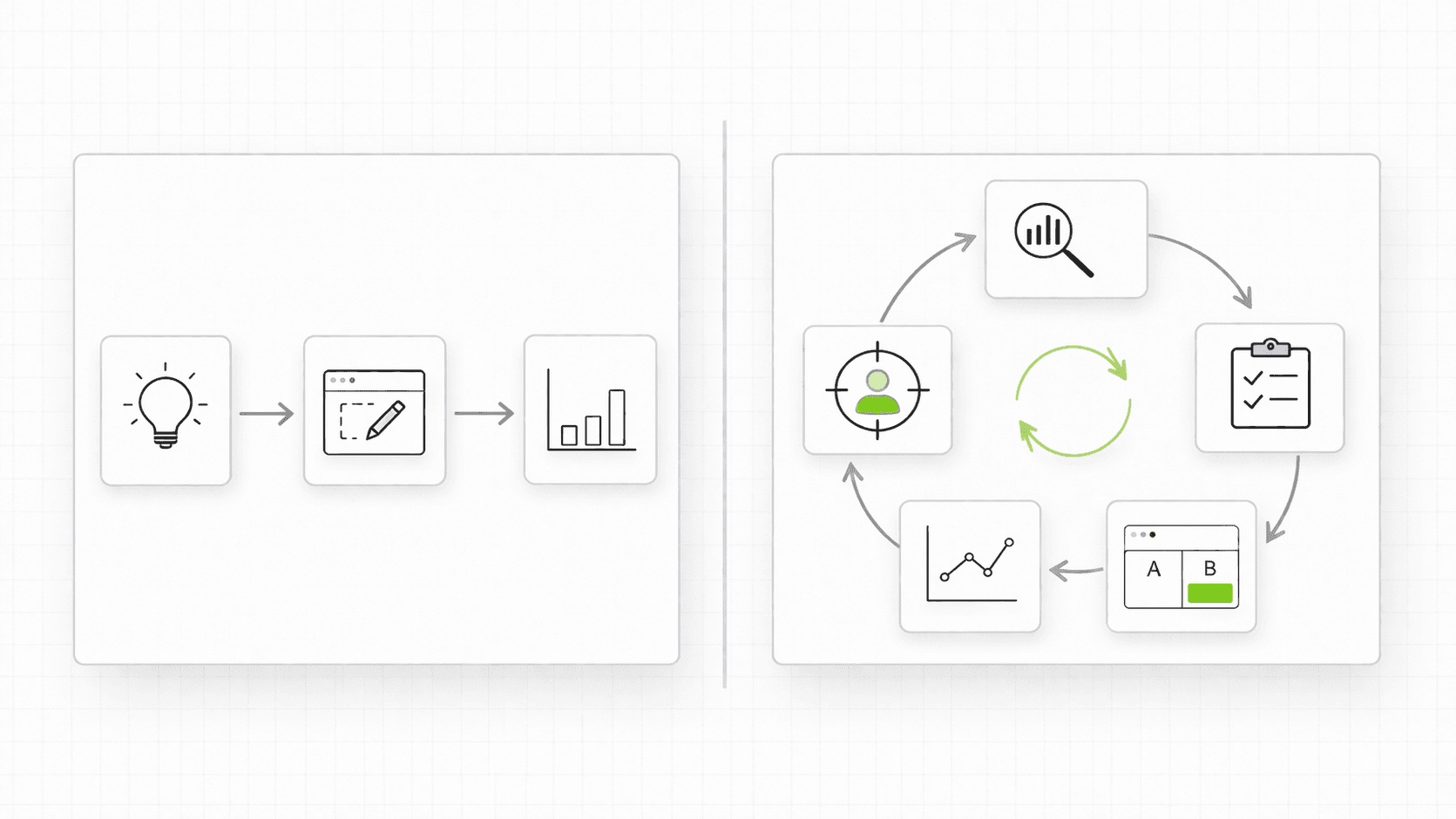
You have a clear hypothesis and the ability to test it. If you have looked at your analytics, identified a specific breakdown point, formed a view on what is causing it, and have the tools and traffic volume to run a meaningful test, you do not need an agency to tell you what to do. You need to run the test. Agencies add value when the diagnosis is unclear or when the testing program needs to be more structured and systematic than one person can manage. If you already know what to test, test it.
Your traffic volume is too low to test meaningfully. This one cuts both ways but leans toward DIY. If you are getting fewer than a few thousand sessions a month on a given page, A/B testing is not going to produce statistically significant results quickly enough to justify an agency retainer. In that situation, the higher-leverage work is usually improving the fundamentals of the page based on qualitative signals, not running quantitative tests. That work can often be done with a focused audit and a targeted rewrite rather than an ongoing engagement.
The problem is clearly in the copy or structure, not in the testing program. A lot of sites that underperform are not failing because their optimization process is weak. They are failing because the page has a fundamental messaging or structural problem that no amount of testing will fix. If the headline is vague, the proof is weak, and the CTA is buried, running multivariate tests on button colors is not going to move the needle. Fixing the fundamentals first is almost always the right call, and that work does not require an agency. It requires honest diagnosis and focused execution. This is exactly what a structured audit is designed to surface: Website Audit Checklist: Fix the Conversion Leaks Before You Spend More on Ads
You have someone internally with real conversion knowledge. If your team includes a marketer or growth person who understands messaging, page structure, buyer psychology, and testing methodology, and that person has the bandwidth to prioritize this, keeping it in-house is often faster and more aligned with the business than briefing an external team. The issue is that this combination of skills and bandwidth is rarer than most companies assume.
When Hiring Outside Help Makes Sense
You have tried fixing it and nothing has changed. This is the clearest signal. If the page has been tweaked, rewritten, and adjusted multiple times over several months and the conversion rate has not moved, the problem is either in the diagnosis or in the execution, and an outside perspective is often what breaks the deadlock. Someone who has seen the same failure patterns across dozens of different pages will often identify the root cause faster than someone who has been staring at the same page for six months.
You are about to put serious ad spend behind the page. When significant budget is going behind a page, the cost of underperformance becomes concrete very quickly. If you are spending five figures a month on paid traffic and your page converts at 1.5% when it should be at 4%, that gap is costing you real money every single day. In that context, the cost of getting expert help is easy to justify against the revenue being left on the table.
You need the work done faster than internal bandwidth allows. Conversion work done slowly is often not done at all. If the person responsible for fixing the page has twelve other priorities and the work keeps getting pushed, an external team with a defined scope and deadline will almost always produce a result faster. Speed has real value when the page is underperforming and traffic is running.
The problem spans multiple disciplines. Strong conversion work usually requires a combination of strategic thinking, copywriting, design, and sometimes development. Finding all of those skills in one internal hire is unusual. An agency or specialist studio that combines them as a single engagement is often more efficient than trying to coordinate multiple internal or freelance resources around a shared goal.
What Most CRO Agencies Actually Sell vs What You Probably Need
This is where the conversation gets more honest than most agency comparison articles are willing to be.
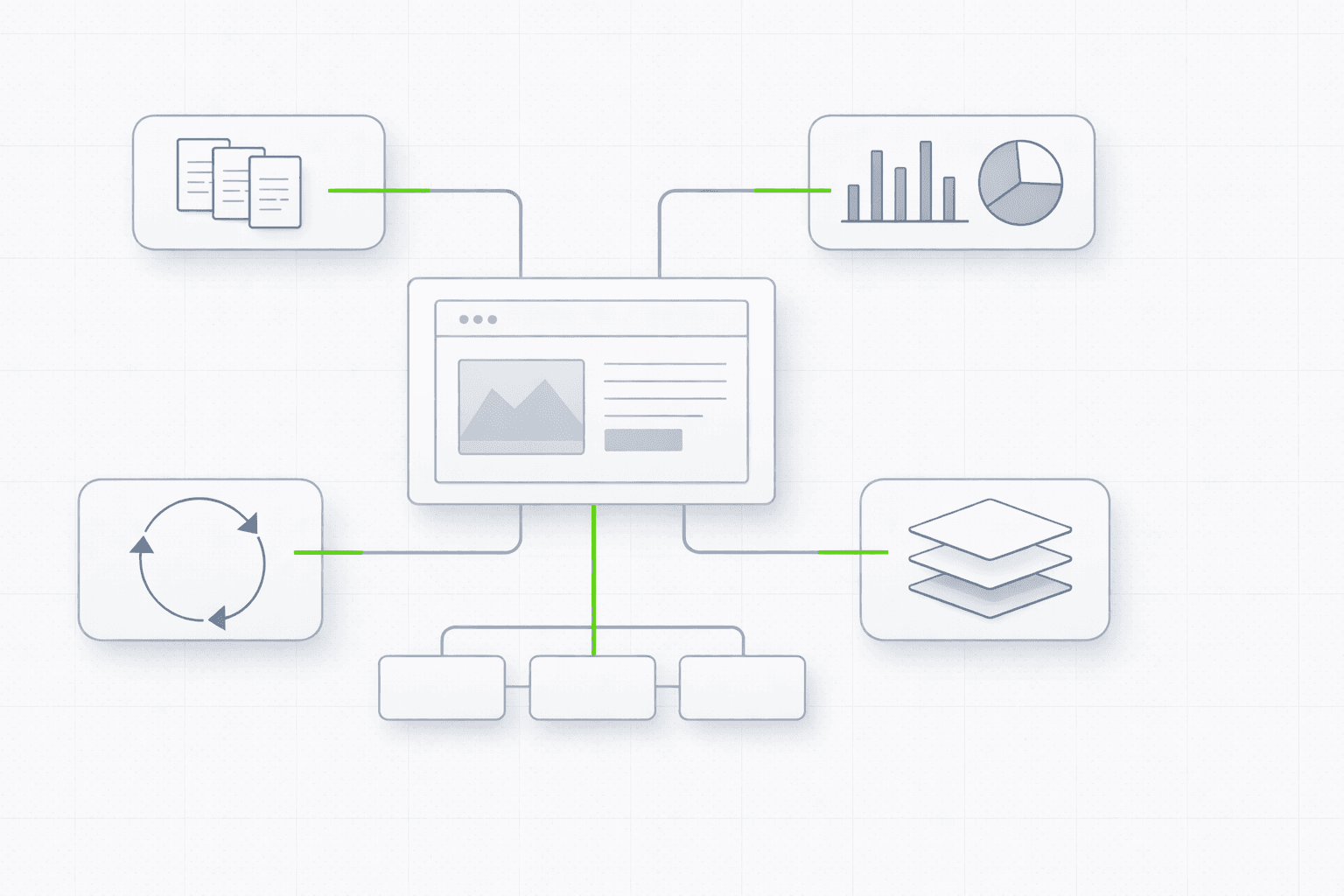
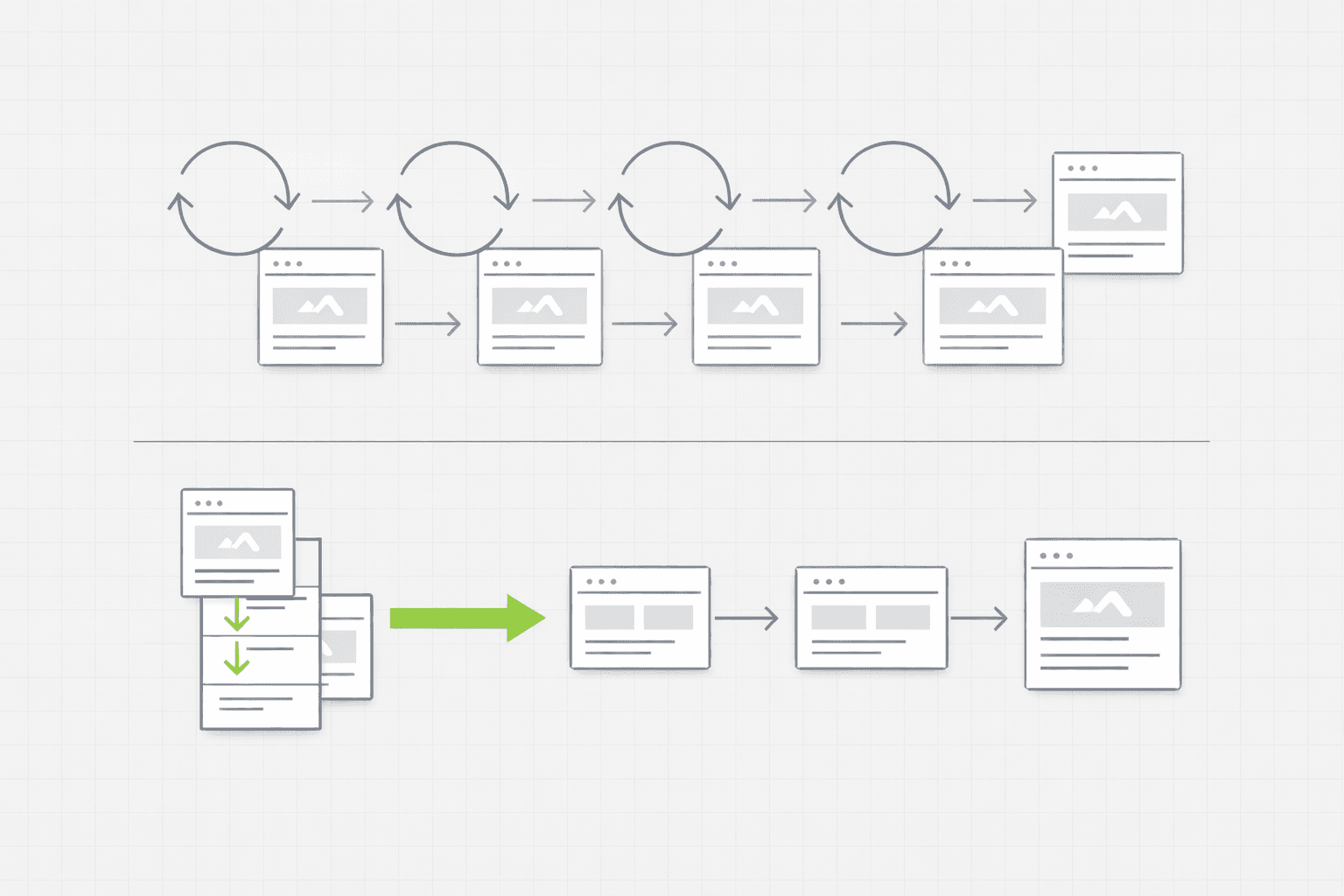
The traditional CRO agency model is built around a retainer. Monthly fee, ongoing testing program, regular reporting, quarterly reviews. This model makes sense for companies with high traffic volumes, mature analytics setups, and a genuine need for a systematic, long-running optimization program. It makes a lot less sense for a B2B company with moderate traffic that has a specific conversion problem on a specific page.
The retainer model also has an incentive problem. An agency being paid monthly has a structural interest in the work continuing. That does not mean they will deliberately string you along, but it does mean the engagement is designed for longevity rather than for solving your specific problem as efficiently as possible and moving on. If what you actually need is a clear diagnosis and a targeted fix, a retainer is probably not the right structure.
What most growing B2B and SaaS companies actually need is closer to a focused engagement with a clear scope: identify the specific problems, fix them, and hand back a page that performs better. That might be an audit plus a rebuild. It might be a copy and structure overhaul on an existing page. It might be a new landing page built with conversion thinking from the ground up. These are project-based problems that fit project-based solutions.
The question to ask any agency or specialist before hiring them is not "what does your process look like" but "what specifically will be different about my page when this engagement ends, and how will we know if it worked." Vague answers to that question are a signal worth paying attention to.
The DIY Trap Nobody Talks About
There is a specific failure mode that happens when companies decide to handle conversion work internally and it is worth naming directly.
The work gets started, deprioritized, picked back up, partially completed, and then quietly abandoned when something more urgent appears. Three months later the page looks slightly different but the underlying problems are the same. Nobody is accountable because it was never really anyone's primary job. The opportunity cost of this cycle is significant and almost never gets calculated.
The question is not really "can we do this ourselves." In most cases the answer is technically yes. The question is "will we actually do it, at the quality it requires, on a timeline that matters." That is a more honest question and it produces a different answer for most teams.
If the conversion problem has been on the roadmap for more than two months without meaningful progress, that is a data point. It is telling you something about whether internal execution is actually going to happen.
How to Make the Decision Without Overthinking It
Run through these four questions honestly.
Does your team have someone with real conversion knowledge who has the bandwidth to prioritize this for the next four to six weeks? If yes, start there. If no, factor that in.
Has the page been a known problem for more than two months without meaningful progress? If yes, internal execution is probably not going to happen at the pace the problem requires.
Is there significant ad spend or sales pipeline running through this page right now? If yes, the cost of delay is real and quantifiable. That changes the math on outside help.
Do you know specifically what is wrong with the page, or do you need a diagnosis first? If you need a diagnosis, that is almost always the right starting point regardless of who does the work that follows. That is exactly what the 48h Audit is built around: See how it works
The honest answer to those four questions will get you further than any framework for choosing between DIY and agency.
The Short Version
Do it yourself when you have the knowledge, the bandwidth, and a clear hypothesis to test. Bring in outside help when you do not have all three, when the page has been underperforming for long enough that internal momentum is not coming, or when the cost of inaction is high enough to make outside help obviously worth it.
The middle ground, which is most companies, is usually best served by a focused project-based engagement rather than a long retainer. Find the specific problem, fix the specific problem, measure the result.
Keep reading