Landing Page vs Website Redesign: What to Build First (If You Want Leads Soon)

Kacper Nadol

Feb 18, 2026

When results are urgent, “redesign the whole site” is usually the slowest way to win. This guide helps you decide what to build first, based on your traffic, your offer, and what is actually blocking conversions.

The question behind the question

People ask: “Should I build a landing page or redesign the website?”

What they usually mean is: “I need results, but I cannot afford to waste time and budget.”

And that is the right framing.

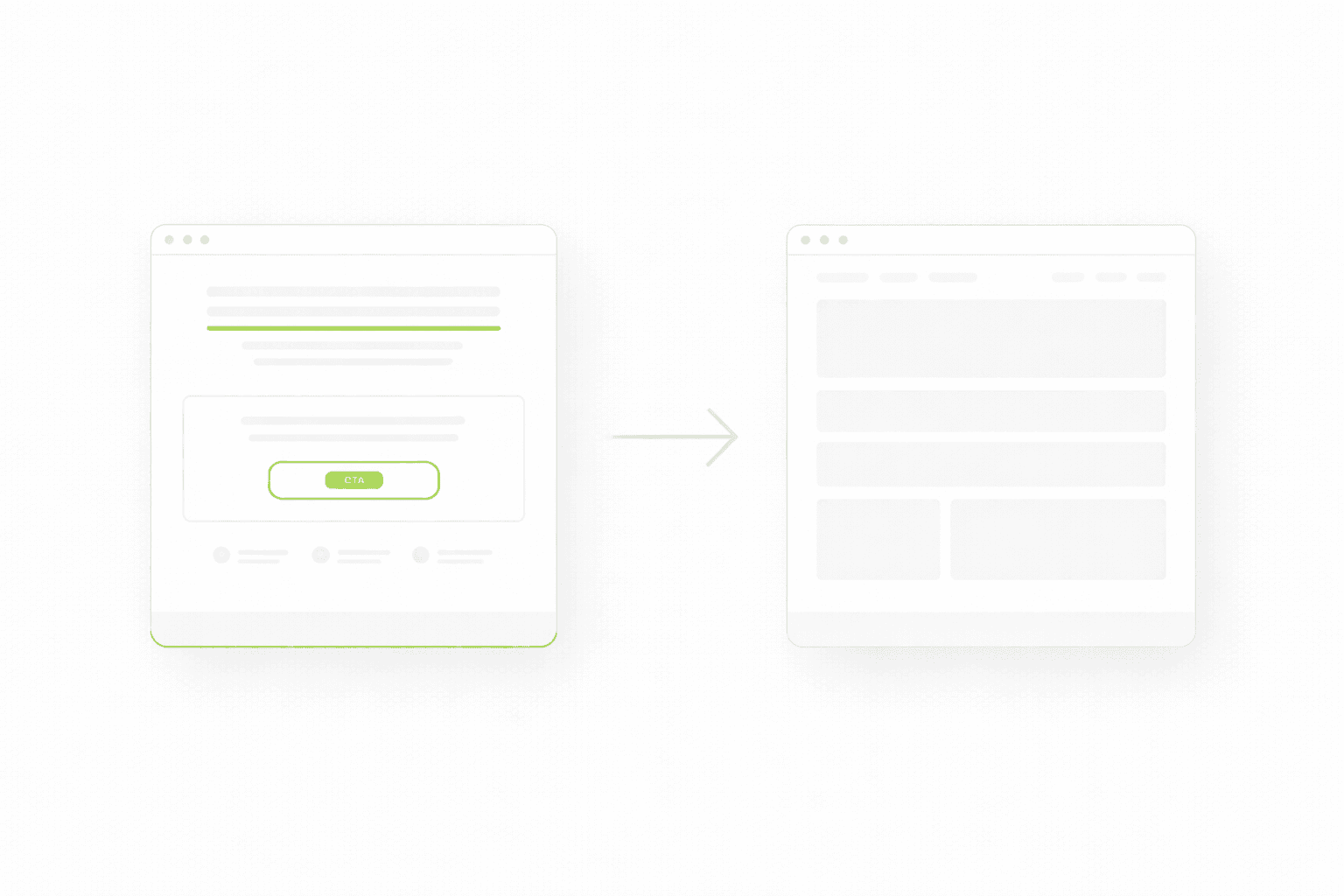
A landing page is a focused conversion asset.
A redesign is a structural rebuild.

Both can be the right move. The problem is choosing based on taste instead of constraints.
If you are not sure what is leaking conversions right now, start with a simple audit pass first.

Start with the goal, not the asset

There are only a few real goals:

  • you need qualified leads fast

  • you need to improve conversion for traffic you already have

  • you need to fix credibility problems that block sales

  • you need to support multiple products, audiences, or funnels

If you pick the wrong asset, you still work hard. You just get slow results.

A simple decision framework (no fluff)

Use this as your baseline.

If most of your traffic is paid, a landing page is often the fastest win.
If most of your traffic is organic across many pages, a redesign might be unavoidable.
If you have low traffic, neither will save you. You need distribution first.

That is the boring truth people skip.

When a landing page is the better first move

A landing page wins when you need focus.

Common scenarios:

  • you are running ads to one offer

  • you sell one core product or one main service

  • you can describe the value in one sentence

  • you can support the claim with proof

  • your current homepage is too broad, too “brand”, too slow

Example you see in the wild:
A SaaS sends paid traffic to a homepage that tries to speak to five audiences.
The visitor sees a generic headline, a feature wall, and no proof until the bottom.
The result is predictable: paid traffic bounces and you blame targeting.
In most cases it is not the targeting. It is the page.

A focused landing page fixes that by doing less:

  • one promise

  • one audience

  • one path

  • proof early

  • one next step

You can ship it fast, test it fast, and iterate without rebuilding the entire site.

When a redesign is the better first move

A redesign makes sense when the site itself is the blocker.

Common signals:

  • your product has multiple pages and none of them convert

  • your navigation is confusing and users cannot find key pages

  • your positioning is unclear across the whole site, not just one page

  • your site is slow, inconsistent, or feels untrustworthy everywhere

  • your business has changed and the current structure is obsolete

Example you see often:
A B2B company has years of content, blog pages, case studies, and product pages.
The problem is not a single landing page. The whole structure is messy.
The wrong pages rank, internal links are weak, and users get lost.

In that scenario, a single landing page might help paid campaigns, but it will not fix the core system.

The hidden third option: the minimum viable rebuild

Most teams think in extremes:

  • either do a landing page

  • or redesign everything

There is a middle move that often wins:
Fix the first screen, proof, and conversion path across a small set of pages.

That usually means:

  • homepage or main service page

  • pricing or offer page

  • one key case study page

  • contact or booking page

You do not need to touch every page to see conversion lift.
You need to fix the pages that carry intent.
If you want a prioritized fix list for your current site, this is exactly what our 48h audit delivers.

This is also SEO-friendly, because it improves internal linking and page quality where it matters.

The 6 questions that choose for you

Answer these honestly. Do not overthink.

  1. Where is your traffic coming from right now? Paid, organic, referrals, direct?

  2. Is there one core offer you are trying to sell, or many?

  3. Can your value be explained in one sentence that is not generic?

  4. Do you have proof you can show today? Numbers, quotes, screenshots, recognizable logos?

  5. Is the site structurally broken, or just one page underperforming?

  6. How fast do you need results, and what is the real budget constraint?

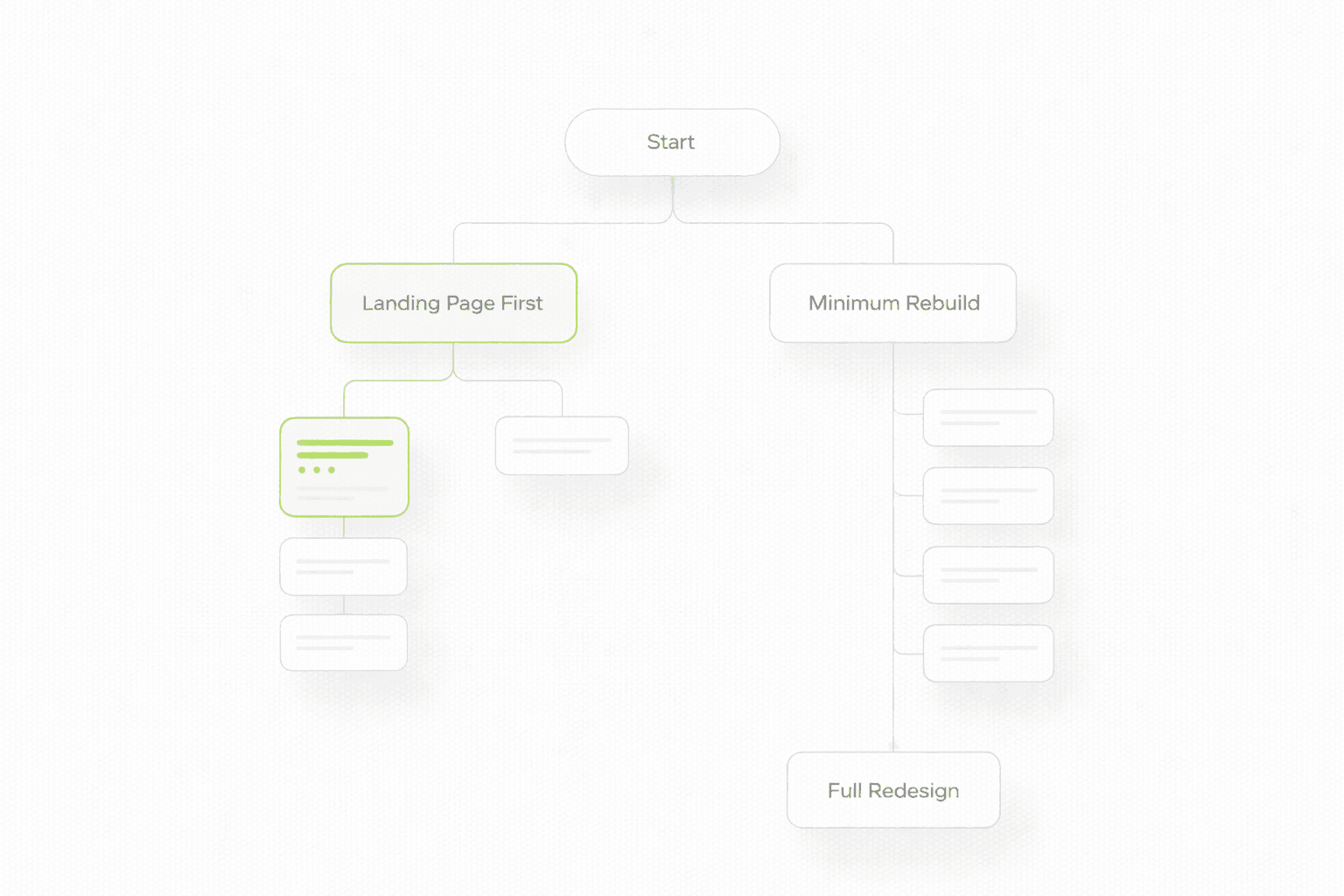
If you are paid-heavy and time-sensitive, landing page first is often rational.
If you are organic-heavy and structurally messy, redesign or minimum rebuild is usually the move.
Common mistakes (that cost weeks)

Here is what wastes time:

  • redesigning before you can explain the offer clearly

  • building a landing page with no proof and expecting it to convert

  • changing visuals while keeping the same vague messaging

  • testing paid traffic when your page is still a leaky bucket

  • starting with the blog when your conversion path is broken

This is why “what to build first” matters. It is not a design question. It is a sequencing question.

If you want help choosing the right first move

If you want a clear answer for your site, based on what is blocking conversions, start here.

When results are urgent, “redesign the whole site” is usually the slowest way to win. This guide helps you decide what to build first, based on your traffic, your offer, and what is actually blocking conversions.

The question behind the question

People ask: “Should I build a landing page or redesign the website?”

What they usually mean is: “I need results, but I cannot afford to waste time and budget.”

And that is the right framing.

A landing page is a focused conversion asset.
A redesign is a structural rebuild.

Both can be the right move. The problem is choosing based on taste instead of constraints.
If you are not sure what is leaking conversions right now, start with a simple audit pass first.

Start with the goal, not the asset

There are only a few real goals:

  • you need qualified leads fast

  • you need to improve conversion for traffic you already have

  • you need to fix credibility problems that block sales

  • you need to support multiple products, audiences, or funnels

If you pick the wrong asset, you still work hard. You just get slow results.

A simple decision framework (no fluff)

Use this as your baseline.

If most of your traffic is paid, a landing page is often the fastest win.
If most of your traffic is organic across many pages, a redesign might be unavoidable.
If you have low traffic, neither will save you. You need distribution first.

That is the boring truth people skip.

When a landing page is the better first move

A landing page wins when you need focus.

Common scenarios:

  • you are running ads to one offer

  • you sell one core product or one main service

  • you can describe the value in one sentence

  • you can support the claim with proof

  • your current homepage is too broad, too “brand”, too slow

Example you see in the wild:
A SaaS sends paid traffic to a homepage that tries to speak to five audiences.
The visitor sees a generic headline, a feature wall, and no proof until the bottom.
The result is predictable: paid traffic bounces and you blame targeting.
In most cases it is not the targeting. It is the page.

A focused landing page fixes that by doing less:

  • one promise

  • one audience

  • one path

  • proof early

  • one next step

You can ship it fast, test it fast, and iterate without rebuilding the entire site.

When a redesign is the better first move

A redesign makes sense when the site itself is the blocker.

Common signals:

  • your product has multiple pages and none of them convert

  • your navigation is confusing and users cannot find key pages

  • your positioning is unclear across the whole site, not just one page

  • your site is slow, inconsistent, or feels untrustworthy everywhere

  • your business has changed and the current structure is obsolete

Example you see often:
A B2B company has years of content, blog pages, case studies, and product pages.
The problem is not a single landing page. The whole structure is messy.
The wrong pages rank, internal links are weak, and users get lost.

In that scenario, a single landing page might help paid campaigns, but it will not fix the core system.

The hidden third option: the minimum viable rebuild

Most teams think in extremes:

  • either do a landing page

  • or redesign everything

There is a middle move that often wins:
Fix the first screen, proof, and conversion path across a small set of pages.

That usually means:

  • homepage or main service page

  • pricing or offer page

  • one key case study page

  • contact or booking page

You do not need to touch every page to see conversion lift.
You need to fix the pages that carry intent.
If you want a prioritized fix list for your current site, this is exactly what our 48h audit delivers.

This is also SEO-friendly, because it improves internal linking and page quality where it matters.

The 6 questions that choose for you

Answer these honestly. Do not overthink.

  1. Where is your traffic coming from right now? Paid, organic, referrals, direct?

  2. Is there one core offer you are trying to sell, or many?

  3. Can your value be explained in one sentence that is not generic?

  4. Do you have proof you can show today? Numbers, quotes, screenshots, recognizable logos?

  5. Is the site structurally broken, or just one page underperforming?

  6. How fast do you need results, and what is the real budget constraint?

If you are paid-heavy and time-sensitive, landing page first is often rational.
If you are organic-heavy and structurally messy, redesign or minimum rebuild is usually the move.

Common mistakes (that cost weeks)

Here is what wastes time:

  • redesigning before you can explain the offer clearly

  • building a landing page with no proof and expecting it to convert

  • changing visuals while keeping the same vague messaging

  • testing paid traffic when your page is still a leaky bucket

  • starting with the blog when your conversion path is broken

This is why “what to build first” matters. It is not a design question. It is a sequencing question.

If you want help choosing the right first move

If you want a clear answer for your site, based on what is blocking conversions, start here.

Don’t waste another month of traffic sending it to a page that can’t (and won't...) sell.

You’re already doing the hard part - getting people to your site. Let’s look at your key pages and see if we can turn that traffic into real leads and sales.

Conversion-focused websites & landings.
Let’s build something that actually performs.

@2026 Ravelink, All Rights Reserved

Don’t waste another month of traffic sending it to a page that can’t (and won't...) sell.

You’re already doing the hard part - getting people to your site. Let’s look at your key pages and see if we can turn that traffic into real leads and sales.

Conversion-focused websites & landings.
Let’s build something that actually performs.

@2026 Ravelink, All Rights Reserved

Don’t waste another month of traffic sending it to a page that can’t (and won't...) sell.

You’re already doing the hard part - getting people to your site. Let’s look at your key pages and see if we can turn that traffic into real leads and sales.

Conversion-focused websites & landings.
Let’s build something that actually performs.

@2026 Ravelink, All Rights Reserved

Don’t waste another month of traffic sending it to a page that can’t (and won't...) sell.

You’re already doing the hard part - getting people to your site. Let’s look at your key pages and see if we can turn that traffic into real leads and sales.

Conversion-focused websites & landings.
Let’s build something that actually performs.

@2026 Ravelink, All Rights Reserved