Homepage Messaging That Converts: A Simple Framework for Your First Screen

Kacper Nadol

Most conversion problems start on the first screen. Not because your product is bad, but because the page says nothing specific. This framework helps you write a homepage message that people actually understand and act on.
The first screen decides more than you want to admit
If someone lands on your site and the first screen feels generic, you do not get “a second chance” lower on the page. They bounce, open a competitor, or save the tab and never return.
That is why homepage messaging is not branding fluff. It is the start of the conversion path.
You can have a great product and still lose because your first screen:
does not say what you do in plain language
does not say who it is for
does not give a believable reason to trust you
does not make the next step feel obvious
If you want a broader checklist for all the leaks beyond messaging, read this first: Website Audit Checklist
The mistake that creates “beautiful nothing”
A lot of homepages try to sound impressive instead of being understood.
You have seen these lines:
“An all in one platform for modern teams.”
“Powering the future of work.”
“Data-driven growth for ambitious brands.”
They are not lies. They are just empty. A visitor cannot picture what changes after choosing you, so they cannot decide.
Specificity is not a writing style. It is a conversion mechanic.
A simple framework you can actually use
This framework is meant for the first screen only. Not the whole page.
You need four ingredients:
outcome
audience
mechanism
proof
Here is how it works.
1) Outcome: what changes after choosing you
A good outcome is not “better” or “faster”. It is observable.
Bad outcomes:
“Grow your business.”
“Improve efficiency.”
“Boost conversions.”
Better outcomes:
“Book more qualified calls from the same traffic.”
“Reduce churn by fixing onboarding drop-off.”
“Turn product pages into decision pages.”
You are not writing poetry. You are removing uncertainty.
2) Audience: who is this for
If you do not name the audience, people assume it is not for them.
You can specify audience by:
role (founders, marketing teams, operators)
category (B2B SaaS, ecom, local services)
stage (early traction, scaling paid traffic, post-launch)
You do not have to narrow to one micro niche. You just have to stop being “for everyone”.
3) Mechanism: why your outcome is believable
Mechanism is the part most sites skip. It is the “how”, but only at the level that makes the promise believable.
Example patterns:
“We do X by removing Y friction from Z step.”
“We use A to diagnose B, then ship C fixes in D days.”
“We rebuild the first screen, proof, and flow so visitors know what to do next.”
Mechanism stops the promise from sounding like marketing.
If you are choosing between a landing page or a full redesign, mechanism also helps scope the work. This is related: Landing Page vs Website Redesign
4) Proof: one small reason to trust you right now
Proof does not need to be dramatic. It needs to be real.
Strong proof types for the first screen:
a short result line
a recognizable logo row
a short quote that mentions an outcome
a simple “used by” line with real brands
a single concrete claim that you can defend
Weak proof:
“Trusted by many.”
“Award-winning team.”
If you have no proof, do not fake it. Pick a smaller promise and build proof over time.
Put it together (example templates)
Use these as templates, not copy to steal.
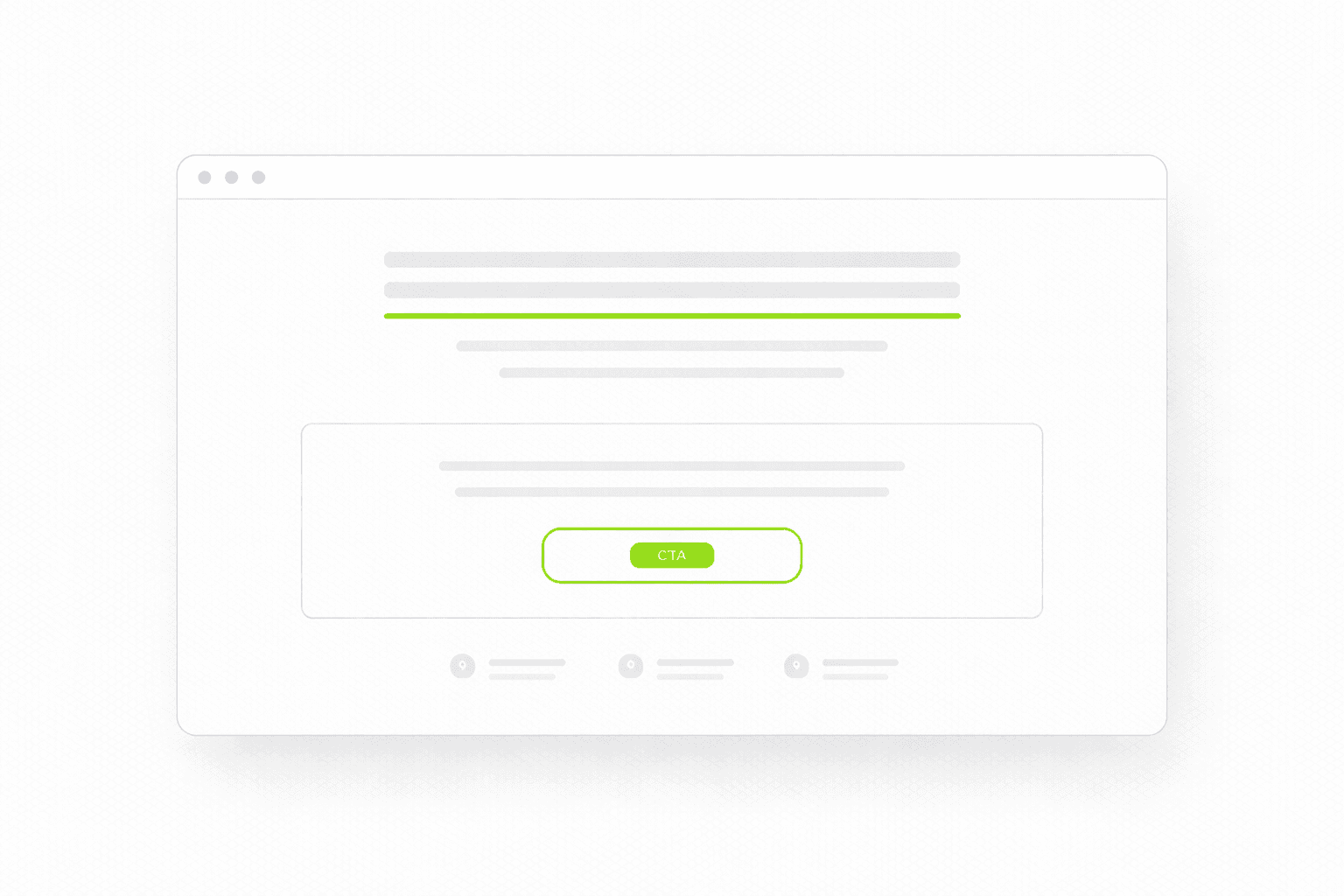
Template A:
Headline: Outcome + for who
Subheadline: Mechanism in one sentence
Proof: one line or logo row
CTA: one clear next step
Template B:
Headline: Remove pain + outcome
Subheadline: who it is for + what you actually do
Proof: one concrete claim
CTA: one clear next step
Important point:
The CTA should match the stage. If the visitor is cold, the first step should feel safe. If the step feels like commitment, you need more proof first.
If you are building in Framer and want to move fast, this guide helps you decide if it is the right tool: Framer Landing Pages
A quick self-audit for your homepage message
Read your first screen and answer:
can I explain it to a friend in one sentence
can I name the target audience without guessing
can I point to the mechanism, not just the promise
can I see proof within the first two scrolls
is the next step obvious and low-friction
If any answer is “not really”, that is your next fix.
If you want this applied to your site (fast)
If you want a clear, prioritized plan for what to change on your first screen and the rest of the conversion path, start here.
Most conversion problems start on the first screen. Not because your product is bad, but because the page says nothing specific. This framework helps you write a homepage message that people actually understand and act on.
The first screen decides more than you want to admit
If someone lands on your site and the first screen feels generic, you do not get “a second chance” lower on the page. They bounce, open a competitor, or save the tab and never return.
That is why homepage messaging is not branding fluff. It is the start of the conversion path.
You can have a great product and still lose because your first screen:
does not say what you do in plain language
does not say who it is for
does not give a believable reason to trust you
does not make the next step feel obvious
If you want a broader checklist for all the leaks beyond messaging, read this first: Website Audit Checklist
The mistake that creates “beautiful nothing”
A lot of homepages try to sound impressive instead of being understood.
You have seen these lines:
“An all in one platform for modern teams.”
“Powering the future of work.”
“Data-driven growth for ambitious brands.”
They are not lies. They are just empty. A visitor cannot picture what changes after choosing you, so they cannot decide.
Specificity is not a writing style. It is a conversion mechanic.
A simple framework you can actually use
This framework is meant for the first screen only. Not the whole page.
You need four ingredients:
outcome
audience
mechanism
proof
Here is how it works.
1) Outcome: what changes after choosing you
A good outcome is not “better” or “faster”. It is observable.
Bad outcomes:
“Grow your business.”
“Improve efficiency.”
“Boost conversions.”
Better outcomes:
“Book more qualified calls from the same traffic.”
“Reduce churn by fixing onboarding drop-off.”
“Turn product pages into decision pages.”
You are not writing poetry. You are removing uncertainty.
2) Audience: who is this for
If you do not name the audience, people assume it is not for them.
You can specify audience by:
role (founders, marketing teams, operators)
category (B2B SaaS, ecom, local services)
stage (early traction, scaling paid traffic, post-launch)
You do not have to narrow to one micro niche. You just have to stop being “for everyone”.
3) Mechanism: why your outcome is believable
Mechanism is the part most sites skip. It is the “how”, but only at the level that makes the promise believable.
Example patterns:
“We do X by removing Y friction from Z step.”
“We use A to diagnose B, then ship C fixes in D days.”
“We rebuild the first screen, proof, and flow so visitors know what to do next.”
Mechanism stops the promise from sounding like marketing.
If you are choosing between a landing page or a full redesign, mechanism also helps scope the work. This is related: Landing Page vs Website Redesign
4) Proof: one small reason to trust you right now
Proof does not need to be dramatic. It needs to be real.
Strong proof types for the first screen:
a short result line
a recognizable logo row
a short quote that mentions an outcome
a simple “used by” line with real brands
a single concrete claim that you can defend
Weak proof:
“Trusted by many.”
“Award-winning team.”
If you have no proof, do not fake it. Pick a smaller promise and build proof over time.
Put it together (example templates)
Use these as templates, not copy to steal.
Template A:
Headline: Outcome + for who
Subheadline: Mechanism in one sentence
Proof: one line or logo row
CTA: one clear next step
Template B:
Headline: Remove pain + outcome
Subheadline: who it is for + what you actually do
Proof: one concrete claim
CTA: one clear next step
Important point:
The CTA should match the stage. If the visitor is cold, the first step should feel safe. If the step feels like commitment, you need more proof first.
If you are building in Framer and want to move fast, this guide helps you decide if it is the right tool: Framer Landing Pages
A quick self-audit for your homepage message
Read your first screen and answer:
can I explain it to a friend in one sentence
can I name the target audience without guessing
can I point to the mechanism, not just the promise
can I see proof within the first two scrolls
is the next step obvious and low-friction
If any answer is “not really”, that is your next fix.
If you want this applied to your site (fast)
If you want a clear, prioritized plan for what to change on your first screen and the rest of the conversion path, start here.
See more articles
See more articles
See more articles
See more articles
Browse the archive for teardowns, checklists and playbooks you can copy straight into your next build.