Landing Page Headline: How to Write One That Actually Stops the Scroll

@nadolconverts
Kacper Nadol
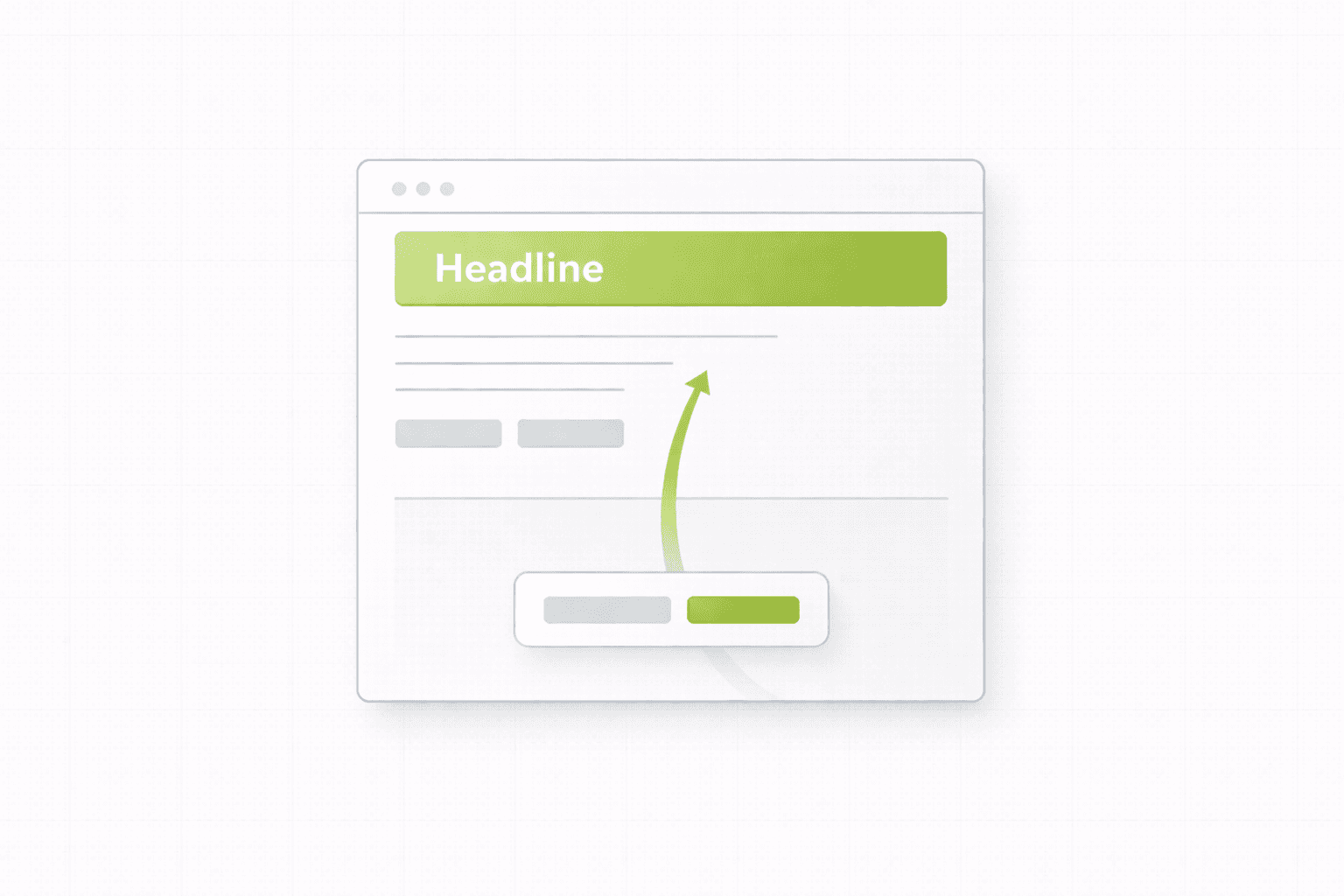
The headline is the single most important line of copy on any landing page. It is also the most commonly written last, treated as a formality, and handed off without enough thought. This article covers what makes a landing page headline actually work, with real frameworks and examples, not just principles.
Why the Headline Carries More Weight Than Everything Else Combined
Most visitors who land on a page will read the headline. A fraction of those will read the subheadline. A smaller fraction will scroll past the hero. An even smaller fraction will reach the CTA.
This is not a cynical view of human attention. It is just how reading works when someone is evaluating whether something is worth their time. The headline is the gatekeeper for everything that follows. If it fails, the rest of the page does not get read. The social proof, the features, the pricing, the testimonials, none of it matters if the headline did not earn the scroll.
This makes the headline the highest-leverage piece of copy on the page by a significant margin. A one-line change to the headline can move conversion more than a complete rewrite of everything below it. That is not an exaggeration. It reflects the reality that most visitors make their stay-or-leave decision in the first few seconds, and the headline is almost always the deciding factor.
Despite this, most landing page headlines get the least strategic attention during a build. They are written quickly, reviewed briefly, approved without testing, and left unchanged for months after launch. The result is pages with strong proof, clear features, and compelling CTAs sitting behind a headline that fails to earn them the right to be read.
What a Landing Page Headline Actually Needs to Do
A landing page headline has one job and it is not to be clever, memorable, or impressive. It is to make the right visitor immediately feel like they are in the right place.
That sounds simple. It is not.
Making the right visitor feel like they are in the right place requires the headline to do several things simultaneously. It needs to signal relevance to a specific person or situation. It needs to create enough tension or curiosity to justify scrolling. It needs to make a claim or promise that is specific enough to be interesting but not so specific that it loses people before they have enough context. And it needs to do all of this in a single line that gets read in under three seconds.
The headlines that do this consistently share a few characteristics. They are specific rather than generic. They name an outcome, a tension, or a situation rather than a category or a capability. They speak to the reader's world rather than the product's world. And they are written to be immediately understood on first read, not appreciated after reflection.
The Most Common Headline Mistakes
Being accurate but irrelevant.
A headline can be completely true and still fail to convert. "The project management platform built for growing teams" is accurate for a lot of products and relevant to none of them specifically. It describes a category, not a situation. The visitor reads it and thinks "okay, another one of those" and leaves.
The problem is not inaccuracy. It is the absence of the specific detail that would make the right visitor feel recognized. Adding one precise element, a role, an outcome, a specific frustration, changes the entire dynamic. "The project management platform that stops your team from running three different tools for the same project" says the same category but names a specific pain. The right visitor reads it and thinks "that is exactly what is happening to us."
Leading with the product instead of the outcome.
"Introducing SmartFlow: the all-in-one workflow automation platform" is a product announcement, not a conversion headline. It tells the visitor what the product is called and what category it belongs to. It does not tell them what changes for them if they use it or why they should care right now.
Outcome-first headlines consistently outperform product-first headlines in B2B and SaaS contexts because the visitor does not care about the product. They care about their problem and whether this thing solves it. "Stop losing hours every week to manual processes your team hates" is a worse headline in terms of brand clarity but a better headline in terms of conversion because it speaks to the experience rather than the solution.
Trying to say too much.
A headline that tries to communicate the product name, the category, the primary benefit, the target audience, and a differentiator in one sentence ends up communicating none of them clearly. The cognitive load of parsing a dense headline is enough to lose the reader before they have understood anything.
Strong headlines make one point. Everything else goes in the subheadline, the body copy, or the features section. The discipline of choosing one thing to lead with is harder than it sounds and more impactful than almost any other single copy decision.
Being vague in the name of being broad.
"Transform the way your team works" is the copywriting equivalent of white noise. It is designed to be inoffensive to the widest possible audience and as a result is interesting to no one. Vague headlines attempt to include everyone and end up resonating with nobody.
The fear behind vague headlines is usually specificity anxiety. If we say this is for ops teams, we will lose the marketing teams. If we name this specific outcome, we will miss everyone who has a slightly different version of the problem. This fear is understandable and almost always wrong. Specificity creates resonance. Resonance creates conversion. The visitors you lose because the headline was too specific were probably not going to convert anyway.
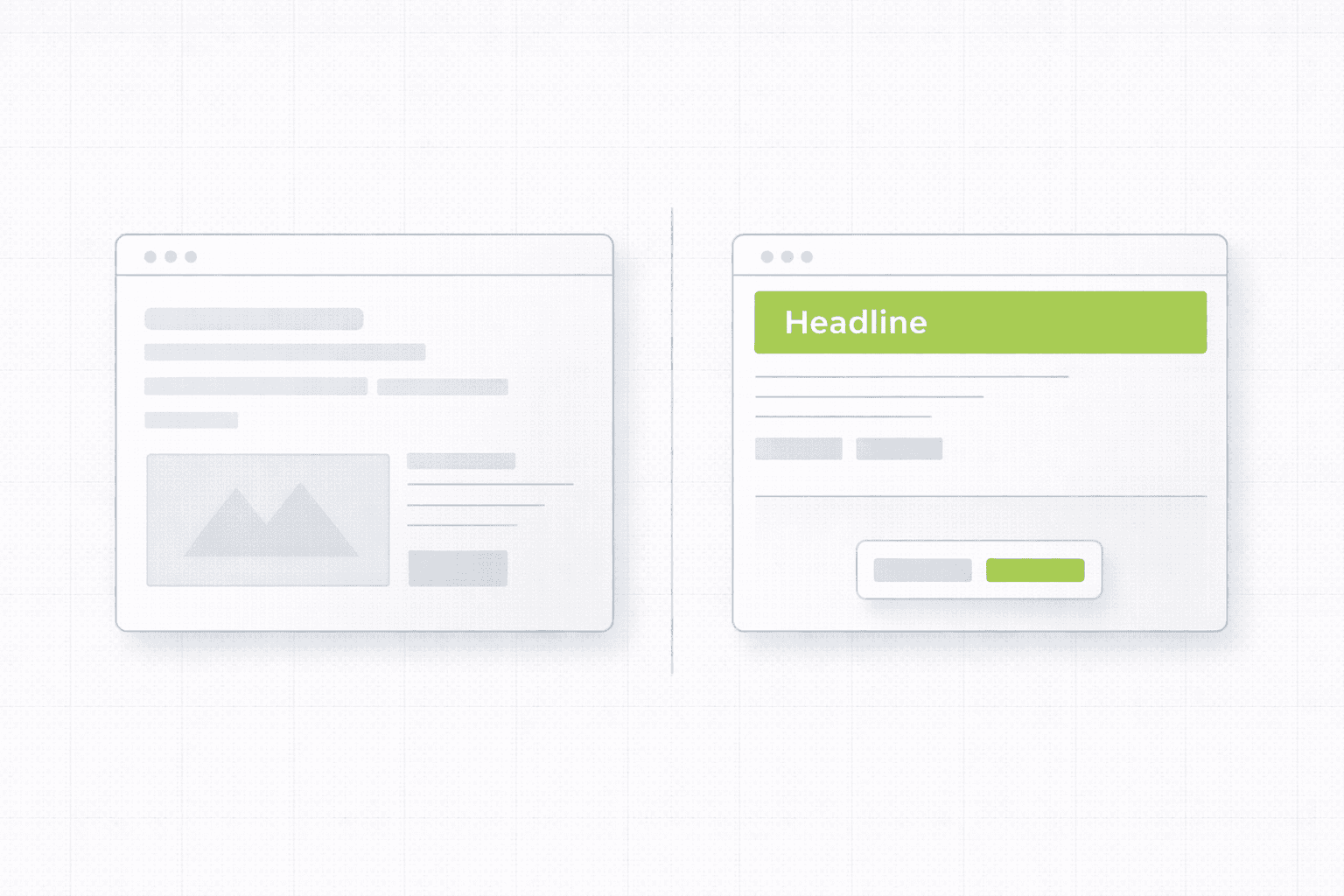
[IMAGE - place here] Off-white background, subtle light-gray grid. Two side-by-side page wireframe rectangles. Each has a thick horizontal bar at the top representing a headline. The left rectangle's headline bar is light gray and thin suggesting a weak, vague headline. The right rectangle's headline bar is thick, solid black with a small neon green underline beneath it suggesting a strong, specific headline. Below each headline bar, faint gray lines represent body copy. Thin 1px borders around both wireframes. Soft shadows. Generous negative space. No text, no people, no logos, no gradients. 16:9, editorial, minimal.
The Frameworks That Actually Work
There is no single formula for a great landing page headline. But there are a few structural approaches that consistently produce strong results in B2B and SaaS contexts.
Outcome plus context.
State the specific result the buyer gets, then add the context that makes it relevant to their situation. The structure is: here is what changes for you, and here is the situation it applies to.
"Get your sales team back to selling instead of updating the CRM" names an outcome and implies a context without needing to be more explicit. The right person reads it and immediately maps it to their own situation.
Problem articulation.
Name the specific frustration the buyer is living with right now, precisely enough that they recognize their own experience in the words. This works because recognition creates trust faster than any claim about the product.
"Your website is getting traffic. Your pipeline is not." is a problem articulation headline. It does not describe the product at all. It describes a situation, and the right visitor reads it and feels seen before they have read a single word about what the page is selling. This is exactly the headline approach we used for one of our most-read articles: Why Your Website Gets Traffic But No Leads
Before and after.
Imply or state directly the contrast between the visitor's current situation and what becomes possible. The tension between where they are and where they could be creates the pull to keep reading.
"From three weeks of onboarding to three days" does this with numbers. "From chasing clients to clients coming to you" does it with contrast. Both create a gap that the rest of the page can fill.
The specific claim.
Make a bold, specific, credible claim that the right buyer would find hard to ignore. The specificity is what makes it credible. "We reduced onboarding time by 60% for every client in the first month" is harder to dismiss than "we dramatically speed up onboarding" because the specificity implies real data behind it.
This framework requires having the proof to back it up. A specific claim without supporting evidence creates skepticism rather than conviction. But when the proof is there, a specific claim headline is one of the most powerful conversion tools available.
The Relationship Between the Headline and the Subheadline
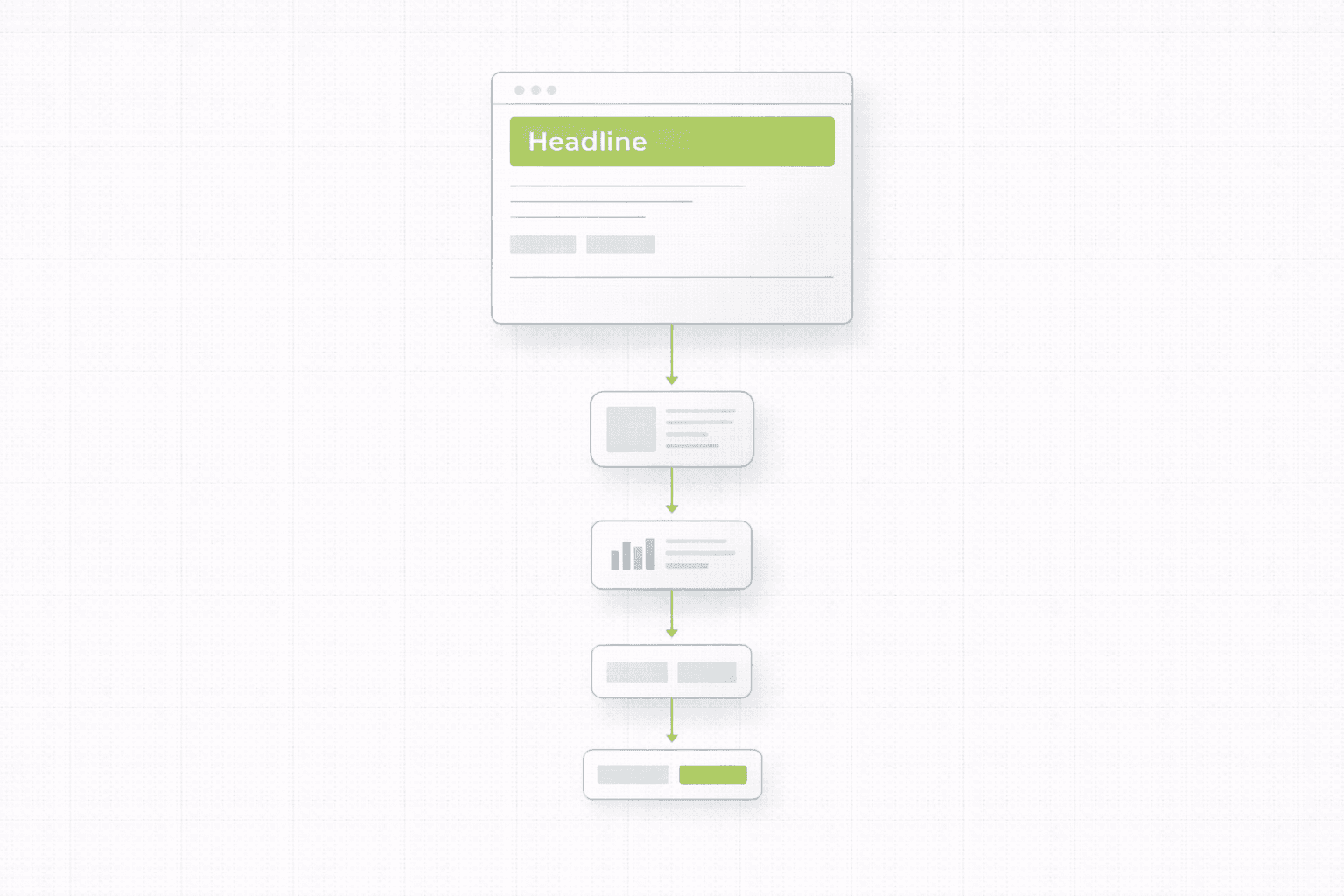
A headline does not work in isolation. It works in combination with the subheadline, and the relationship between the two determines how much information the visitor absorbs in that critical first few seconds.
The most effective structure is a headline that creates a hook or a tension, followed by a subheadline that resolves or develops it. The headline asks the question. The subheadline answers it. The headline names the outcome. The subheadline explains how.
What does not work is a subheadline that restates the headline in different words. If the visitor reads the subheadline and learns nothing new, the subheadline is wasted space in the most valuable part of the page.
A useful test: cover the subheadline and read only the headline. Then read only the subheadline. If both sentences are saying the same thing, rewrite the subheadline to add information the headline does not include. Specificity about who this is for, how the solution works at a high level, or what makes it different from the obvious alternatives. The full framework for what the first screen needs to accomplish is here: Above the Fold on a Landing Page: What It Is, Why It Matters, and How to Get It Right
How to Test and Improve Your Headline
If your page has enough traffic to run a meaningful test, the headline is almost always the right place to start. The impact of a headline change is large enough that even a modest improvement in conversion rate produces a measurable result quickly.
The right approach is not testing random variations against each other. It is forming a specific hypothesis about why the current headline is failing and writing the alternative to test that hypothesis. If you believe the current headline is too vague, the test version should be significantly more specific. If you believe it leads with product rather than outcome, the test version should flip that priority. Testing a hypothesis produces learning you can build on. Testing random variations produces a winner you cannot explain.
If your traffic is too low for meaningful A/B testing, qualitative methods produce better insight faster. Five-second tests, where you show the page to someone for five seconds and ask what they understood, reveal whether the headline is communicating its intended message clearly. Customer interviews asking what language they would use to describe the problem the product solves often produce headline copy more compelling than anything written from scratch.
The minimum standard for any landing page headline is that a visitor in the target audience can read it once and immediately understand what the page is offering and whether it is relevant to them. If it requires a second read or produces confusion, it is not ready. If you want to know whether your headline is doing its job on your actual page, start here
Writing Multiple Options Before Committing
One of the most useful habits in headline writing is generating a large number of options before evaluating any of them. The first headline that comes to mind is almost never the best one. It is usually the most obvious one, which is often the most generic one.
A useful exercise is to write twenty headline variations for the same page before evaluating any of them. Force yourself past the obvious options into territory that feels slightly uncomfortable. Too specific, too bold, too direct. Some of those will be unusable. Some will reveal an angle you would not have found if you had stopped at three options.
Evaluate them against a single question: if the ideal customer for this page read this headline while distracted, scrolling quickly, with twenty other tabs open, would they slow down? If the answer is yes, it is worth developing further. If the answer is maybe or probably not, keep writing.
The goal is not a headline that everyone likes. It is a headline that the right person cannot ignore.
The Short Version
The headline is the most important line on the page and the one that gets the least strategic attention in most builds.
It works when it is specific, speaks to the reader's situation rather than the product's capabilities, makes one clear point, and earns the scroll by creating enough tension or recognition to make continuing feel worthwhile.
It fails when it is vague, product-first, trying to say too many things at once, or written to be broadly inoffensive rather than specifically compelling.
Write more options than you think you need. Test against a real hypothesis. And measure it against the only standard that matters: does the right person slow down when they read it?
Keep reading