Website Redesign Cost: An Honest Breakdown of What You Actually Pay For

@nadolconverts
Kacper Nadol
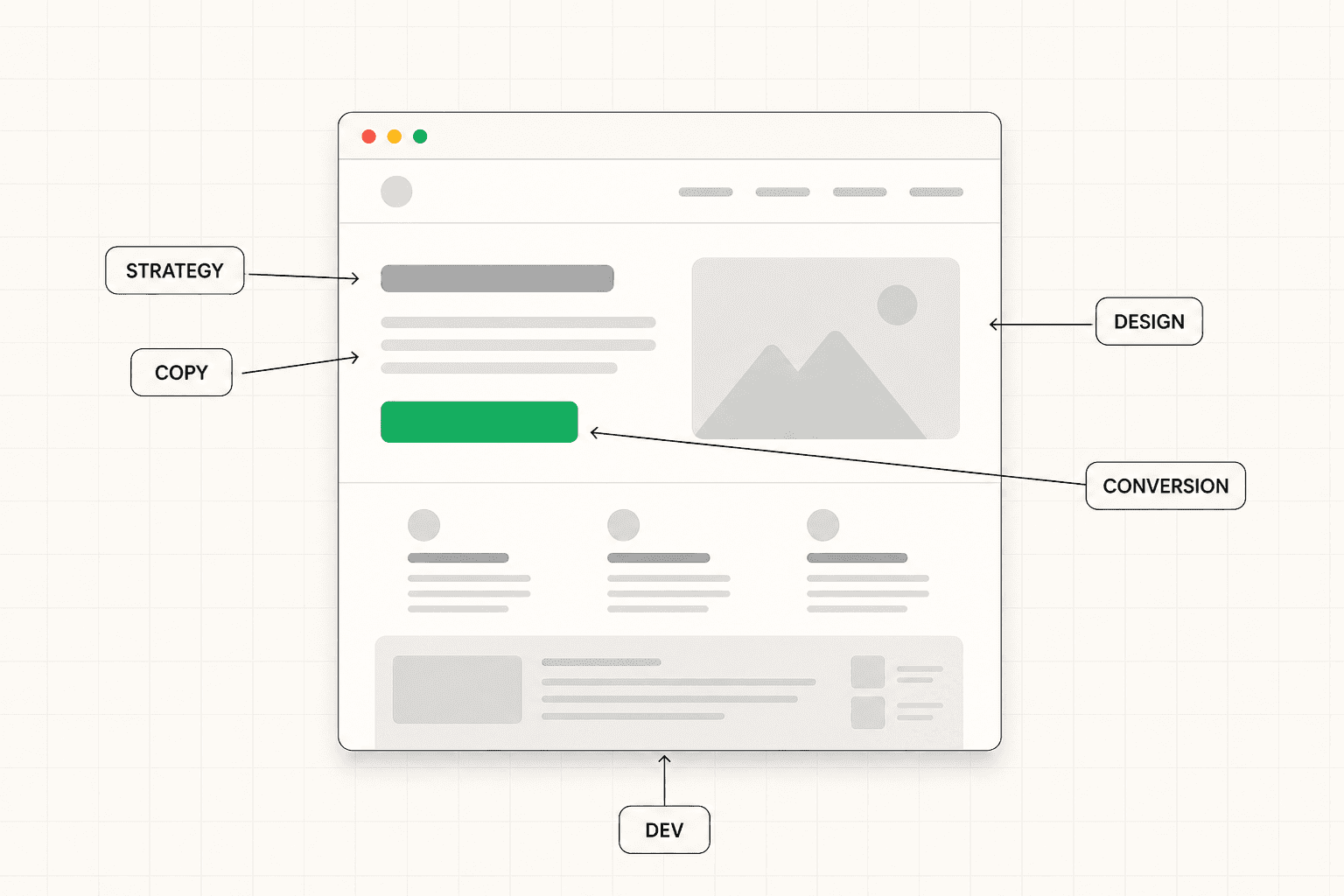
Website redesign pricing is wildly inconsistent and most agencies are not eager to explain why. This article breaks down what actually drives the cost, what you should expect at each tier, and how to know whether you are paying for a real strategic rebuild or just a new visual layer on the same problems.
Why This Question Is Genuinely Hard to Answer
Search "website redesign cost" and you will find the same vague ranges everywhere. $5,000 to $100,000. $10,000 to $250,000. The numbers are technically accurate and almost completely useless for anyone trying to budget a real project.
The reason the range is so wide is not that the market is opaque. It is that the same word, "redesign," covers genuinely different products. A redesign can mean reskinning an existing site with updated visuals and the same underlying structure. It can mean rebuilding a few key pages with new copy and conversion thinking. It can mean a complete strategic overhaul that includes positioning, messaging, design, and development from the ground up. These are not variations of the same thing. They are different scopes of work that share a label.
The price differences reflect this. A $6,000 redesign and a $60,000 redesign are not the same product at different price points. They involve different processes, different deliverables, different levels of strategic input, and different commercial outcomes. Comparing them by price without understanding what you are actually buying produces decisions that go badly in predictable ways.
This article is going to give you a working framework for understanding what drives cost in website redesigns and what you should expect at each tier.
What You Are Actually Paying For
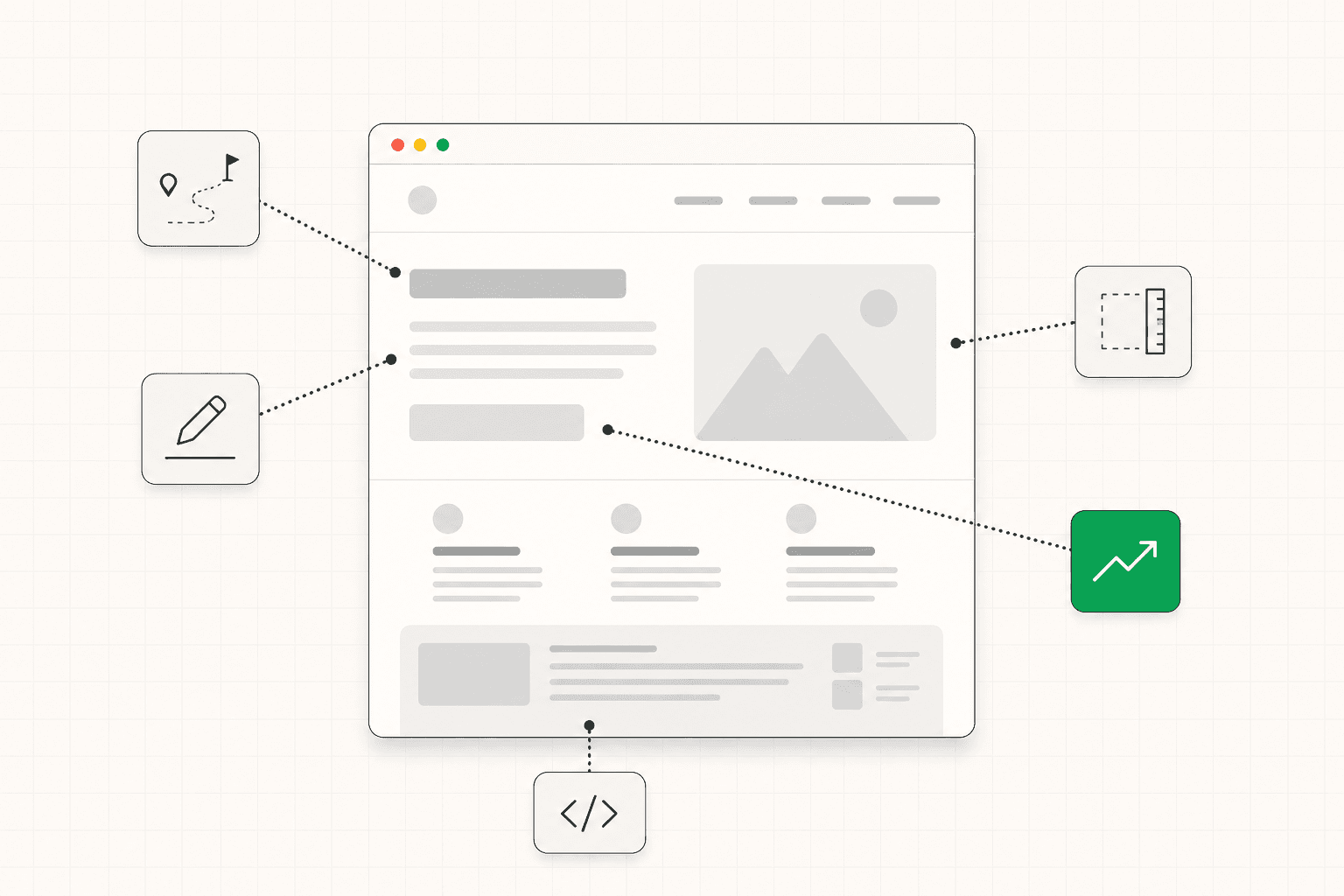
Before looking at numbers, it helps to be precise about what makes up the cost of a redesign.
Strategy and discovery. Does the agency or studio doing the work invest time in understanding your business, your buyer, your competitive context, and your commercial goals before any design begins? Strategy-led work costs more because it requires real thinking before any execution. It also tends to produce significantly better commercial outcomes, because the design and copy decisions are anchored in something concrete rather than in aesthetic preference.
Messaging and copywriting. This is the most underpriced and undervalued part of website work. The words on the site do most of the conversion work. A site with sharp, specific, buyer-aware copy will outperform a beautifully designed site with generic copy almost every time. When real copywriting is included in scope, that adds meaningful cost because it is genuinely hard to do well at the level required for a commercial website. The argument behind why copy matters more than design on landing pages is here: Landing Page Copywriting: What Actually Makes It Convert
Design quality and specificity. There is a wide range between a customized template, a refreshed version of an existing design system, and a custom-designed site built around a specific visual direction and brand expression. Custom design takes more time and requires more skill. It produces something that does not look interchangeable with every other site in your industry.
Development and build quality. How the site is built affects load speed, mobile experience, ongoing maintenance, and how easy it is for your team to update content without a developer. A properly built site in Framer, Webflow, or custom code will be faster, more reliable, and easier to manage than one assembled in a builder with bloated code. Build quality is invisible until it is a problem.
Number of pages and complexity. A four-page site costs significantly less than a thirty-page site even when the strategic and design quality is the same. Custom layouts on multiple page types, specialized functionality, integrations with other tools, multilingual support, and complex content structures all add cost.
Project management and timeline. A well-managed project with clear communication, defined milestones, and a structured review process costs more than a loosely managed one. Tight timelines also push costs up. Compressing a project from three months to six weeks usually means more people working on it simultaneously, which has a price.
What You Actually Get at Each Price Tier
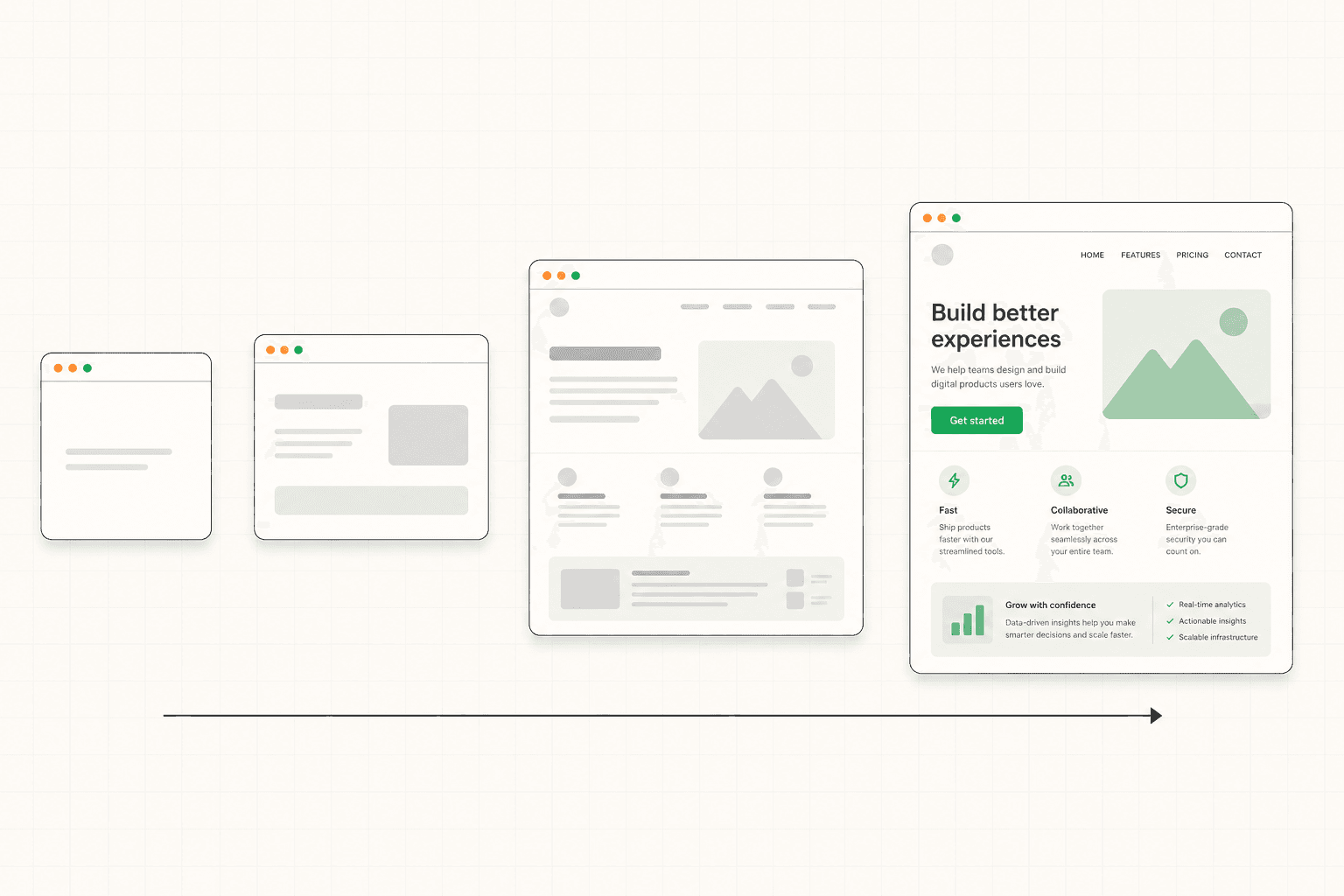
Here is an honest breakdown of what the market looks like in 2026 and what to expect at each level.
Under $5,000: Templates and entry-level freelancers
At this price point you are buying execution with little or no strategic input. You get a customized template or a small-scale build with your content, your colors, and your branding. The structure is borrowed. Copy is usually your responsibility or is very lightly written. There is no conversion thinking, no real research, and minimal accountability for what the site actually does commercially.
This works for very small businesses, side projects, or extremely early-stage validation. It does not work as the primary commercial surface for a B2B or SaaS company that depends on the site to generate leads or close deals. The cost of underperformance at this tier is almost always higher than the savings on the build.
$5,000 to $15,000: Mid-range freelancers and small studios
This is the most variable tier in the market. Some freelancers and small studios at this level produce genuinely strong work. Most produce competent execution without strategic depth. You typically get a custom or semi-custom design, basic copywriting input, and a properly built site, but the strategic foundation is often thin or assumed rather than developed.
The risk at this tier is that the output looks professional enough that the gaps in strategic work are invisible until the site goes live and underperforms. A site that looks polished is not the same as a site that converts. This tier makes sense for businesses with simple positioning, clear differentiation, and no major messaging or conversion problems to solve. It does not work as well when there are real strategic questions that need to be addressed in the rebuild.
$15,000 to $40,000: Boutique studios and conversion-focused agencies
This is where you start getting a complete commercial product. At this tier, a good studio includes proper strategic input, custom design, real copywriting, and high-quality development. The conversion thinking should be built into the process rather than treated as a separate add-on. Discovery work, messaging exploration, and structural decisions happen before any visual work begins.
This range makes sense for most serious B2B and SaaS companies rebuilding their primary commercial site. The work at this level is calibrated to produce measurable improvements in lead generation, conversion rate, or sales pipeline rather than just a refreshed visual identity. The ROI is straightforward to justify when the site is a meaningful part of the company's commercial infrastructure.
$40,000 and above: Full-service strategic rebuilds
At this level you are paying for a complete process: positioning research, messaging strategy, custom copywriting, bespoke design, premium development, and often ongoing optimization or post-launch support. This makes sense for companies with significant ad spend behind the site, complex products that require careful explanation, multiple buyer personas that need to be addressed, or situations where the site is a core sales asset and meaningful conversion improvements are worth tens or hundreds of thousands in revenue.
At this tier, the site is not a deliverable. It is a strategic asset built to produce specific commercial outcomes over time.
What Drives the Price Up Within Any Tier
Even within a given tier, certain factors push costs higher and they are worth understanding before getting quotes.
The number of unique page types matters more than the total page count. Twelve pages built from three core templates is significantly less work than twelve pages with twelve different layouts. Custom page designs add cost linearly.
Copywriting scope is one of the largest variable cost drivers. A studio writing the full site costs more than one writing only the homepage and key landing pages. A studio reviewing and refining client-supplied copy costs less than either.
Animations, interactive elements, and custom motion design add development time. Sometimes these are genuinely worth it for brand perception. Sometimes they are decoration that increases cost without affecting conversion.
Integrations with CRMs, marketing automation tools, payment systems, or custom backend functionality add development cost. The complexity of these integrations is often underestimated in initial scope conversations and worth surfacing explicitly.
CMS setup and content migration from an existing site is rarely free even when it looks like a small task. Migrating content from a complex existing site to a new CMS structure can take significant time depending on the volume and the structural differences between the two systems.
Tight deadlines almost always cost more. Compressing a project that would normally run three months into six weeks usually means more people working in parallel, which carries a cost.
The Hidden Cost Most People Underestimate
There is a cost that does not appear in any proposal and is usually larger than the cost of the rebuild itself: the cost of a redesigned site that does not actually solve the problem.
Companies redesign because the current site is not working commercially. Lead volume is low. Lead quality is poor. The messaging feels off. The site is not supporting the sales process. A rebuild is supposed to fix these things.
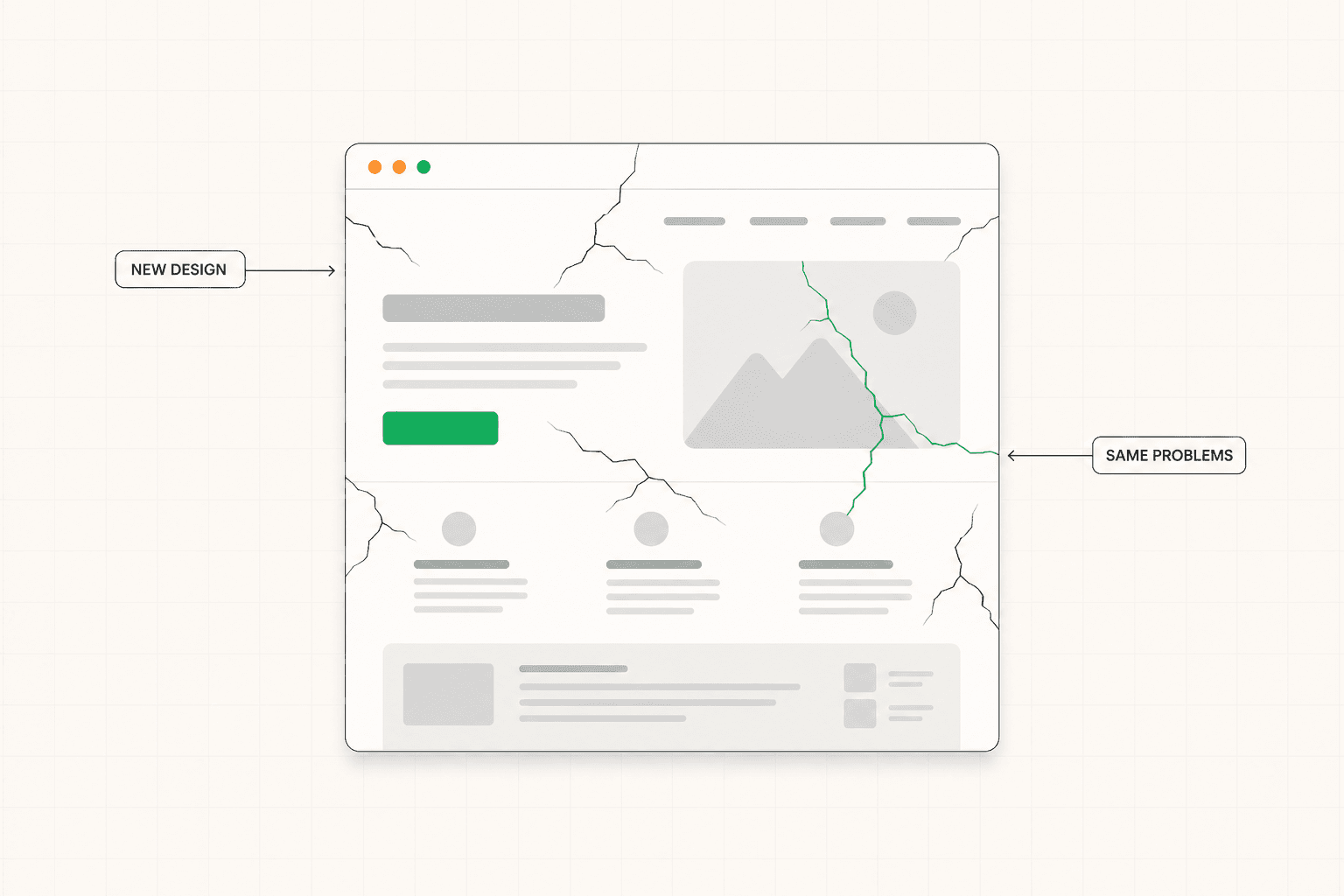
When the rebuild does not fix them, the cost is not just the budget spent on the new site. It is everything that happened during the build period and after. The marketing campaigns that ran against an underperforming site. The sales conversations that started with a website apology. The leads that did not come in because the new site has the same fundamental problems as the old one in different visual packaging.
This is the most expensive failure mode in website redesign: building a new site without first diagnosing why the current one is failing. A redesign that treats the symptoms without identifying the cause is essentially a $15,000 to $50,000 visual upgrade. Sometimes that is fine. Often it is a missed opportunity that takes another year and another budget cycle to correct. The case for diagnosing before rebuilding is the central argument here: Why Your Website Gets Traffic But No Leads
How to Know If You Are Paying for the Right Thing
The clearest signal that you are working with a studio or agency that actually understands website work is that they ask about your business before they ask about your design preferences.
A studio that leads with "what visual direction do you want" is selling design. A studio that leads with "what is not working with the current site, who are you trying to reach, and what does success look like commercially" is selling strategic outcomes. These are different products even when the output looks superficially similar.
Before signing anything, ask these questions directly.
Does your process include strategic and messaging work, or do you execute on a brief I provide? What does the discovery phase actually look like? What is included in copywriting and what is my responsibility? How do you think about conversion architecture and structure? What happens if the site does not perform as expected after launch?
The answers reveal quickly whether the price you are looking at reflects real strategic capability or just production capacity. The full breakdown of how to choose a landing page agency applies here too: Landing Page Agency: What to Look For, What to Avoid, and How to Choose Right
Before You Commit to a Redesign
If you are about to spend $20,000 to $50,000 or more on a website redesign, the most valuable thing you can do before any agency conversation is build a clear picture of what is actually wrong with the current site.
That clarity changes every conversation that follows. It allows you to evaluate proposals against a specific standard rather than a vague brief. It tells you quickly whether the agency is responding to your actual problem or proposing their standard solution to a generic version of it. And it often reveals that some of what looks like it needs a rebuild is actually fixable within the existing site at a fraction of the cost.
A structured audit produces that clarity faster than any internal debate. See how the 48h Audit works
The Short Version
Website redesign cost varies wildly because the word "redesign" covers genuinely different products. A reskin and a strategic rebuild are not the same thing at different prices.
For a serious B2B or SaaS company building a primary commercial site with real strategic and conversion thinking behind it, expect to spend $15,000 to $40,000 as a realistic starting point. Below that you are making trade-offs that usually show up in the results. Above that you are paying for a complete process that makes sense when the commercial stakes are higher.
What you are really paying for at any price is someone's ability to understand your business, build a site that supports it commercially, and produce something that actually solves the problem the rebuild is supposed to address. That capability is worth more than most redesign budgets assume.
Keep reading