What Is a Good Conversion Rate for a Landing Page? (And Why Your Benchmark Might Be Wrong)

@nadolconverts
Kacper Nadol
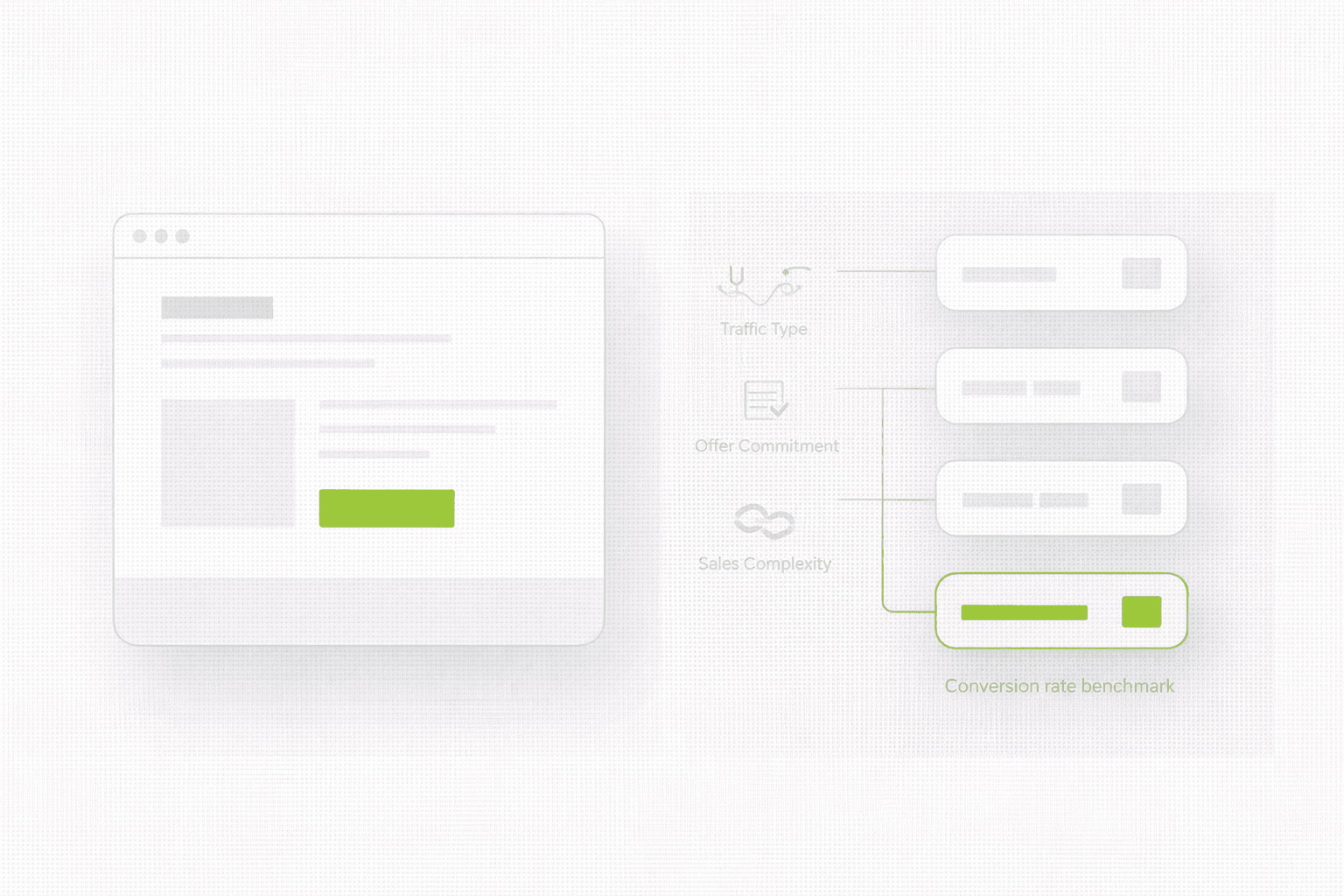
Most landing page conversion rate benchmarks floating around online are either too vague to be useful or pulled from industries that have nothing to do with yours. This article breaks down what a good conversion rate actually looks like, what moves the number, and what to do if yours is not where it should be.
The Number Everyone Quotes and Why It Does Not Help You
Ask most marketers what a good landing page conversion rate is and they will say "around 2 to 5 percent." Some will go further and say top-performing pages hit 10 percent or more. These numbers are not wrong exactly. They are just stripped of all the context that makes them meaningful.
A 2% conversion rate on a cold traffic paid campaign targeting a broad audience is actually decent. A 2% conversion rate on a warm retargeting campaign for a high-ticket B2B product is a problem. A 10% conversion rate on a free trial signup page with no credit card required is normal. A 10% conversion rate on a $500 per month SaaS demo request page would be extraordinary.
The benchmark matters almost nothing without knowing what kind of traffic is hitting the page, what the page is asking the visitor to do, what the product costs, and how long the sales cycle is. A single number applied across all of those situations is not a benchmark. It is a guess dressed up as data.
What Actually Determines Your Conversion Rate Ceiling
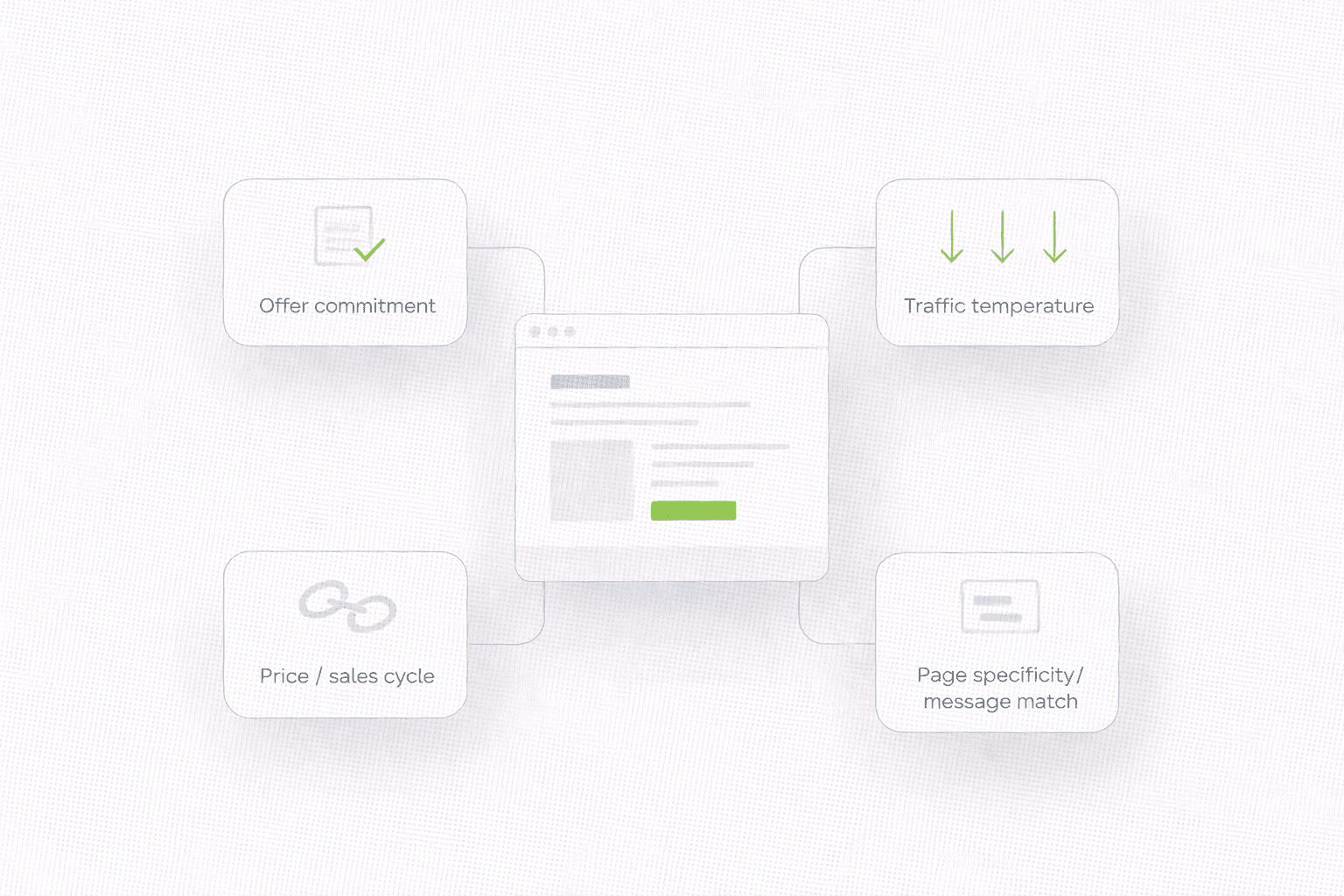
Before comparing your rate to any industry average, it helps to understand what is setting your ceiling in the first place. There are a few variables that matter more than anything else.
The offer and the ask. The lower the commitment you are asking for, the higher your conversion rate will naturally be. A page asking for an email address to download something free will convert at a completely different rate than a page asking someone to book a demo with a sales rep. These are not comparable numbers. If you are benchmarking a demo request page against a lead magnet page, you are comparing apples to something that is not even a fruit.
Traffic temperature. Someone who clicked a retargeting ad after visiting your pricing page three times is not the same visitor as someone who found you through a broad awareness campaign or a generic Google search. Warm traffic converts at higher rates because the visitor already has context. Cold traffic needs to do more work on the page before it will commit. Your conversion rate is partly a reflection of where your visitors are coming from before they arrive.
Price and sales cycle length. The higher the price point and the longer the buying decision, the lower your conversion rate will naturally be and the less that matters. A $30,000 annual contract does not get decided on a landing page. The page's job in that context is not to close the sale. It is to generate enough trust and clarity to get the right person to raise their hand. A 1% conversion rate producing qualified enterprise leads can be worth more than a 15% conversion rate producing unqualified free tier signups.
Page specificity and message match. A page that speaks directly to the exact person who clicked the ad or search result that brought them there will consistently outperform a generic page pointed at everyone. This is one of the highest-leverage things you can improve, and it costs nothing except thinking clearly about who you are actually talking to. Read more on this: Homepage Messaging That Converts: A Simple Framework for Your First Screen
Realistic Benchmarks by Context
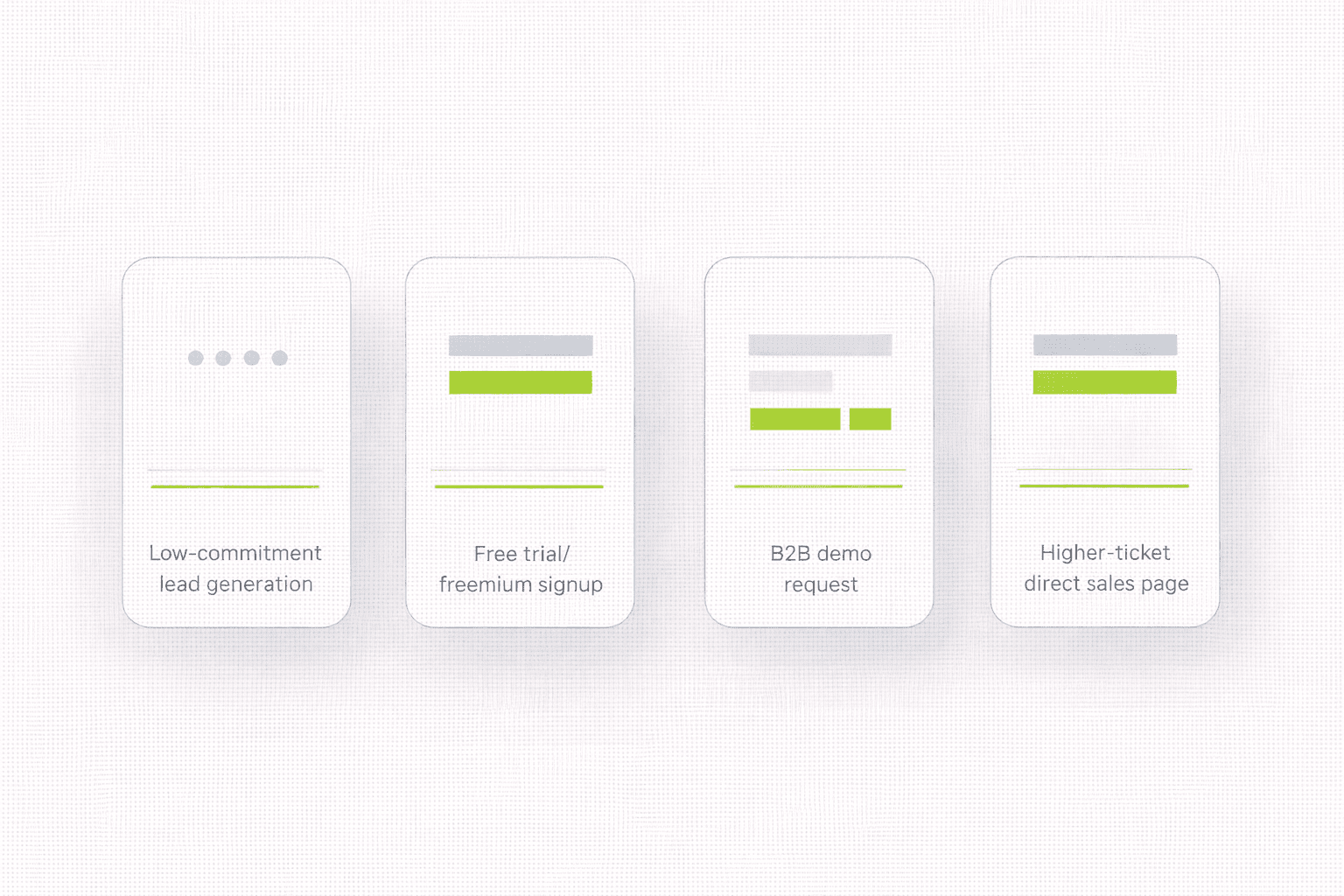
With all of that in mind, here is a more useful way to think about conversion rates by situation rather than by industry average.
Lead generation pages (name and email, no payment): Anything above 20% is strong. 10 to 20% is solid. Below 5% suggests a real problem with either the offer, the traffic match, or the page itself.
Free trial or freemium signups (no credit card): 8 to 15% is a reasonable range for targeted traffic. Below 5% on warm traffic is worth investigating seriously.
Demo or discovery call requests (B2B): 2 to 8% is a realistic range depending on traffic quality and how specific the targeting is. If you are running paid traffic to a cold audience and hitting 3%, that is workable. If you are sending warm referral traffic and hitting 3%, that is a problem.
Sales pages (direct purchase, higher price point): 1 to 3% is normal for mid-to-high ticket products. Below 1% consistently on targeted traffic usually points to a trust or clarity problem on the page.
These are not rules. They are starting points for asking better questions about what is happening on your page.
When a Low Conversion Rate Is Not Actually the Problem
Here is something most conversion rate articles will not tell you: a low conversion rate is sometimes the right outcome.
If your page is doing its job of qualifying visitors, some people should leave without converting. A landing page for a premium B2B service that converts at 1% but produces highly qualified leads that close at 40% is a better business asset than a page converting at 8% but producing leads that waste three hours of sales time each and close at 5%.
Conversion rate is a means to an end. The end is revenue, not a metric. If your sales team is consistently telling you that the leads coming in are wrong, that is often a sign your page is converting too easily and not filtering enough. This is worth reading alongside this: How to Qualify Leads on Your Website Without Killing Conversions
The goal is not the highest possible conversion rate. The goal is the highest possible rate of the right conversions.
The Signs Your Conversion Rate Is Genuinely Too Low
That said, most pages with low conversion rates are not strategically filtering. They are just failing. Here are the patterns that suggest your rate is a real problem worth fixing.
Your traffic quality is reasonable but nothing converts. People are finding the page through relevant searches or targeted ads, spending time on it, and leaving without acting. This usually points to a clarity or trust problem. The page is not making a strong enough case.
Your conversion rate is high but lead quality is terrible. As mentioned above, this is qualification failure, not conversion success. The page is letting everyone through because it is not specific enough about who it is actually for.
Your rate drops significantly on mobile. This is a friction and layout problem. Mobile visitors are not less likely to convert by nature. They are less likely to convert on a page that was not properly thought through for smaller screens.
Your rate is inconsistent across traffic sources. If organic traffic converts at 6% and paid traffic converts at 0.8%, the page is probably fine. The ad targeting or the ad-to-page message match is the problem. Fix the traffic before blaming the page.
What to Do If Your Rate Is Underperforming
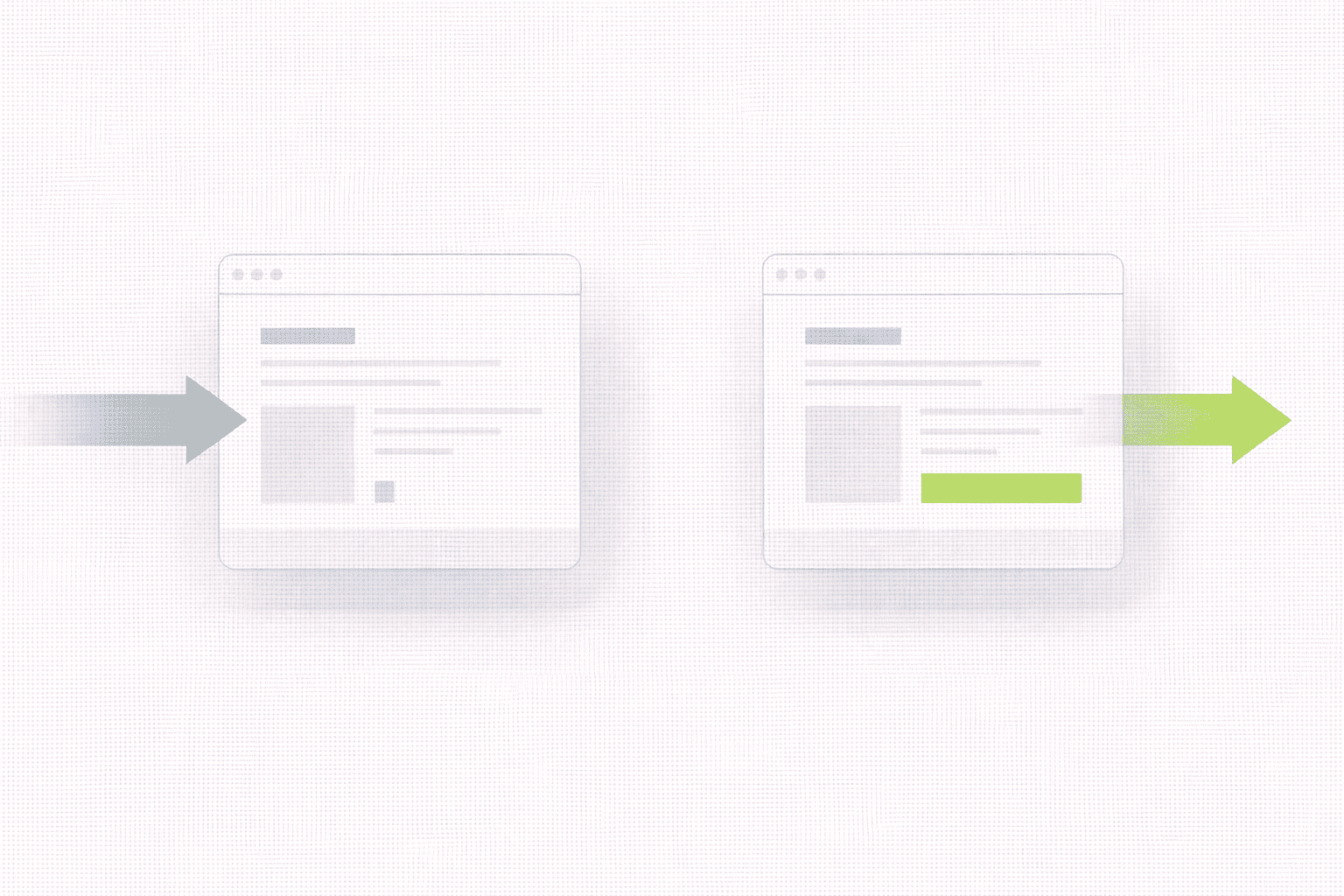
If you have looked at your numbers in context and concluded that yes, the page is genuinely underperforming, the most useful thing you can do is resist the urge to start changing things randomly.
Random changes produce random results. The page might improve, or it might get worse, and you will not know why either way. What you actually need is a diagnosis before a prescription.
Start by identifying where in the page visitors are dropping off. If people are leaving immediately, the problem is almost certainly in the first screen. Something about the headline, the subheadline, or the visual hierarchy is failing to create enough momentum to scroll. This is exactly what above the fold means in practice and why it matters so much.
If people are scrolling but not converting, the problem is usually further down. Either the proof is weak, the CTA is not compelling, there is friction in the form, or the page raises questions it does not answer. Each of these has a different fix and they are worth separating before you start rewriting everything.
If you are not sure where the breakdown is happening, a structured audit is almost always faster than trial and error. It maps the specific failure points instead of generating a long list of generic recommendations. See how the 48h Audit works
The Honest Answer to the Original Question
A good conversion rate is one that is producing the right leads at a volume that makes your acquisition cost work for your business. That is it.
The 2 to 5% figure you will find everywhere is a starting point for sanity-checking, not a universal standard. What matters more is understanding what your page is asking, who it is asking it of, and whether the output is actually moving your business forward.
If the answer to that last question is "not really," the benchmark is not your problem. The page is.
Keep reading