How to Increase Website Conversion Rate: What Actually Moves the Number

@nadolconverts
Kacper Nadol
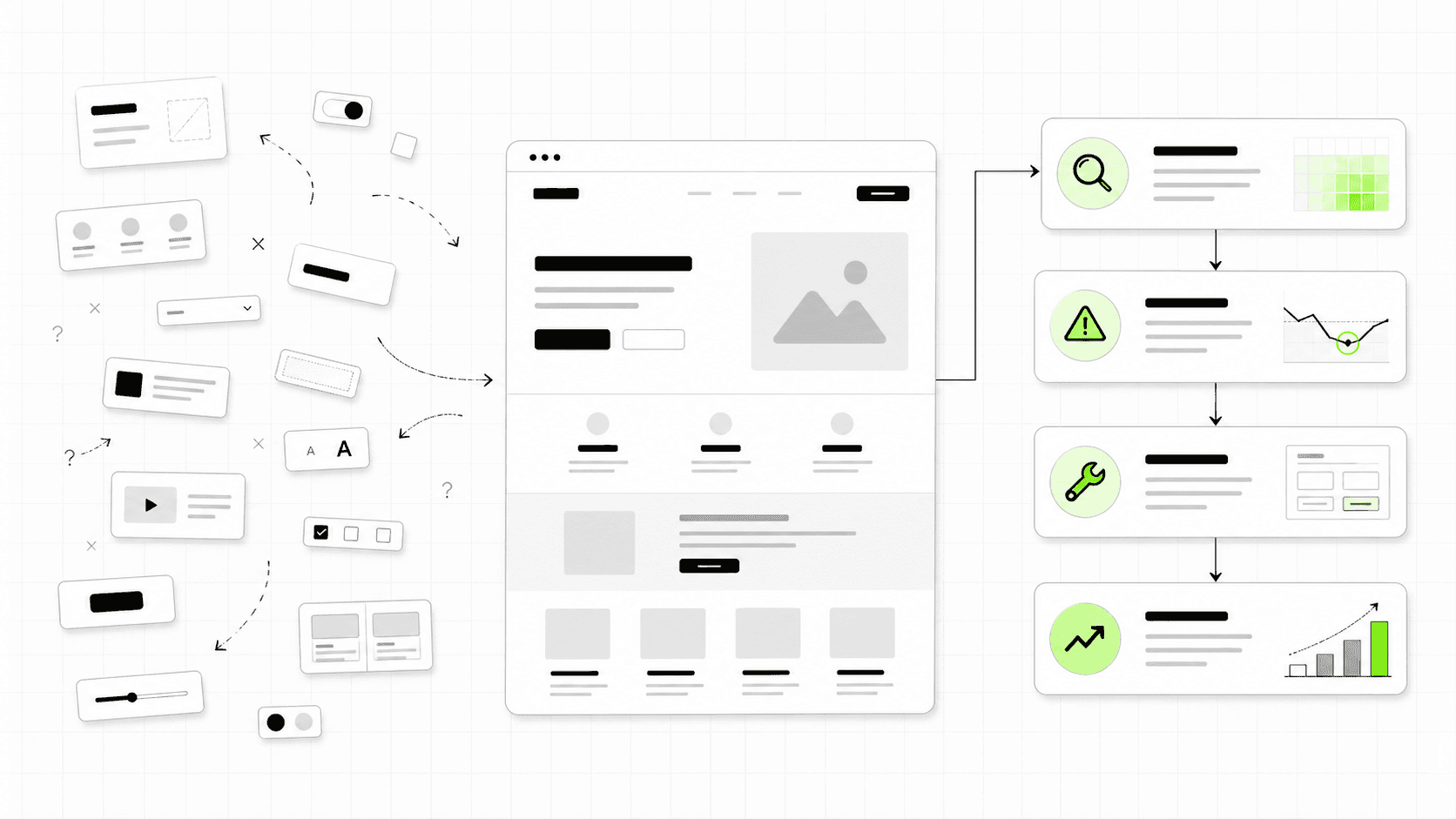
Most advice on increasing conversion rate is either too generic to act on or focused on tactical tweaks that move the number by fractions. This article covers the interventions that actually produce meaningful conversion improvements and why most optimization efforts miss them entirely.
Why Most Conversion Optimization Efforts Underperform
There is a gap between how conversion rate optimization gets talked about and what actually moves the number in practice.
The popular version of CRO is about testing. Run an A/B test on the headline. Try a different button color. Move the CTA above the fold. These are real optimization tactics and they have their place. But they are incremental improvements to a page that may have fundamental problems those tweaks cannot touch.
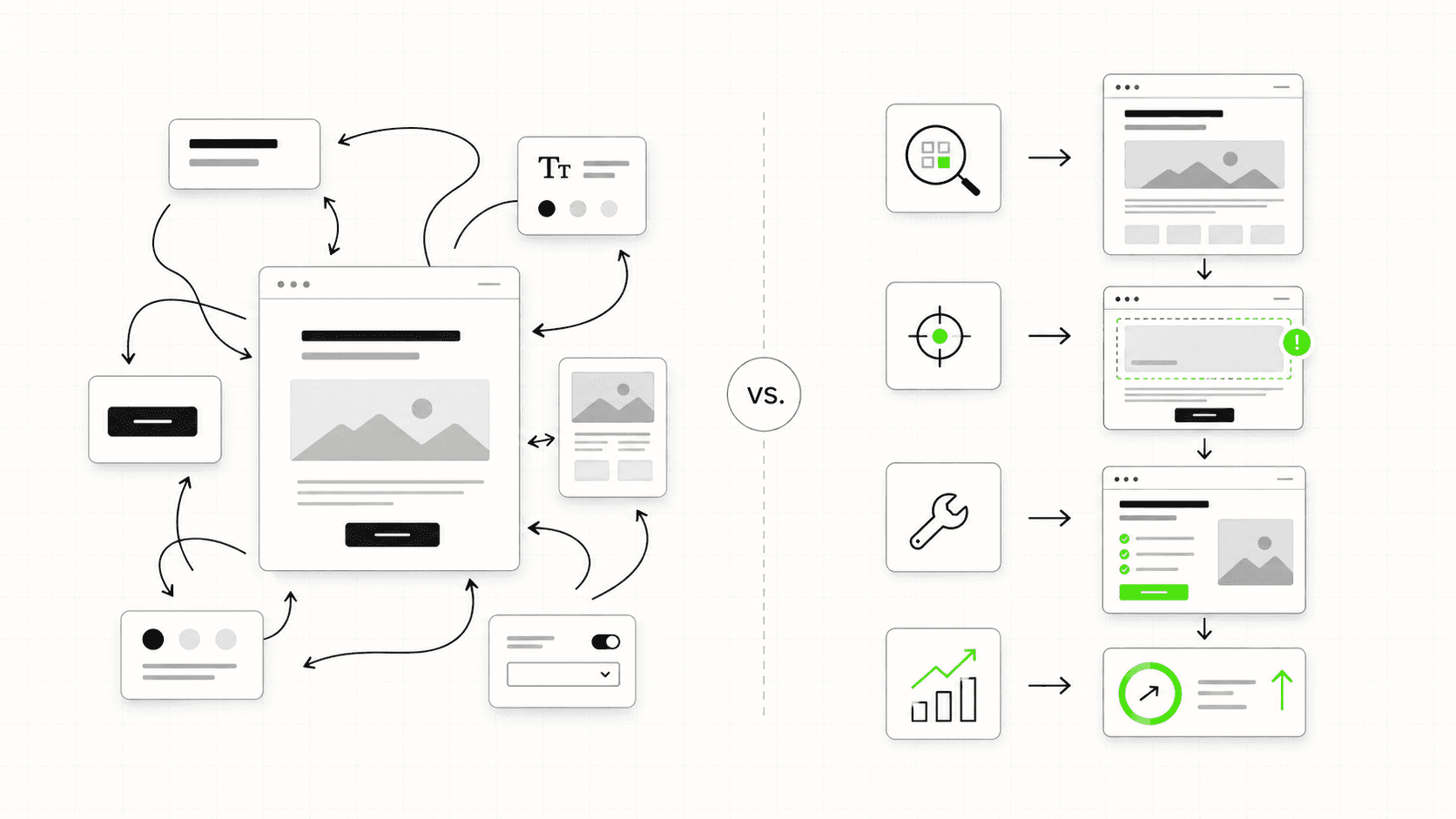
The version that actually produces meaningful results starts somewhere different. It starts with identifying why the right visitors are not converting rather than with a list of elements to test. The diagnosis comes before the intervention. The specific problem comes before the generic solution.
Most conversion optimization efforts underperform because they skip the diagnosis and go straight to tactics. The result is a series of small changes that may or may not address the actual problem, measured in ways that make it hard to know whether anything is actually working.
The companies that improve conversion rate meaningfully tend to do one thing differently. They identify the specific breakdown point first. Then they fix that specific thing. Then they measure the result. That sequence sounds obvious but it is violated more often than not.
The Highest-Leverage Places to Intervene
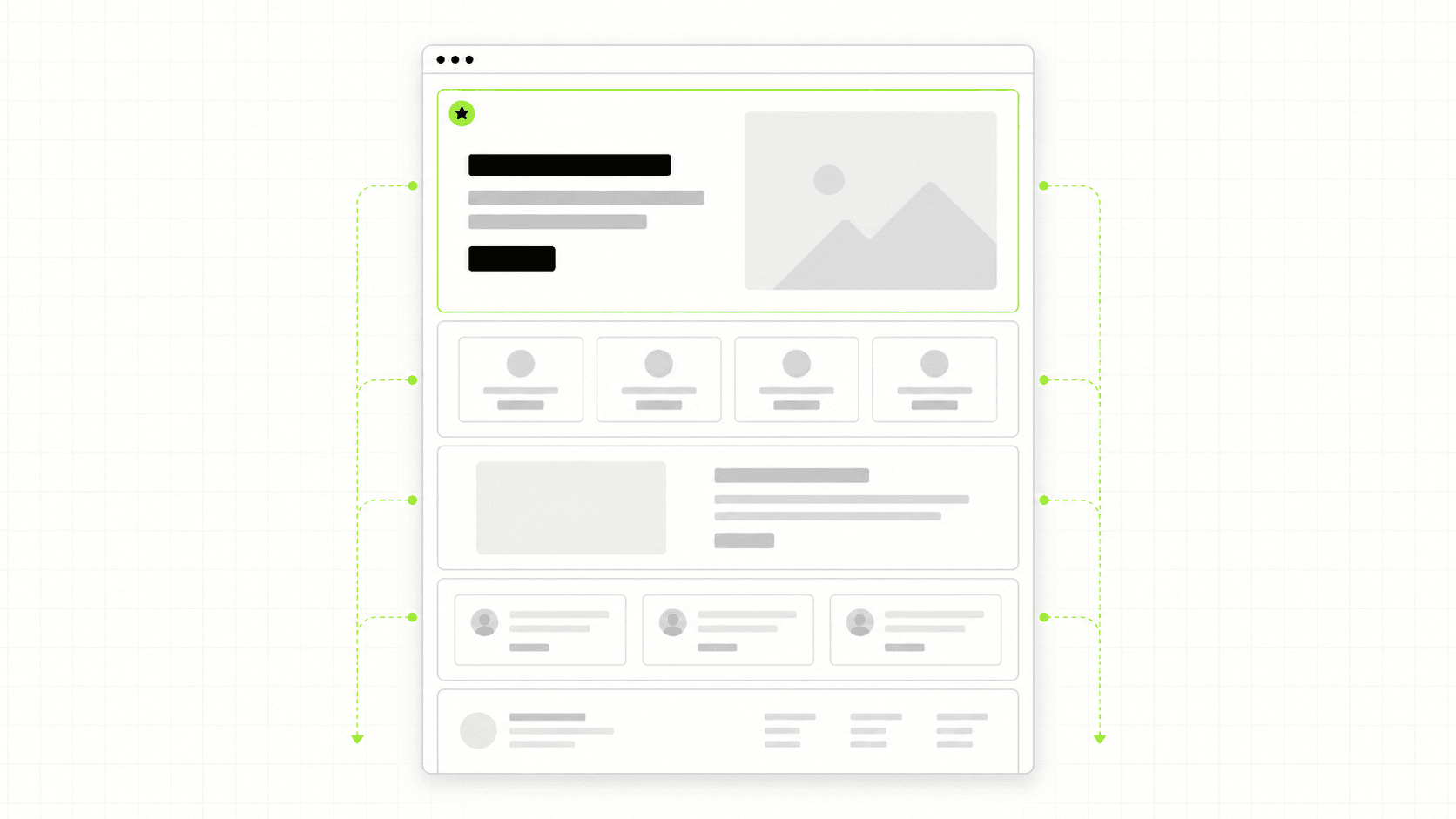
Not all conversion improvements are equal. The same effort applied to different parts of a page produces dramatically different results depending on where the actual problem is.
Improving the first screen almost always produces the largest lift.
The above-the-fold section of a page is where the majority of visitors make their stay-or-leave decision. A change that earns even a small percentage more visitors past that first frame means everything below it gets seen by more people. The compounding effect of that improvement runs through every subsequent section and the CTA at the end.
A vague headline rewritten to speak directly to the target visitor's specific situation. A subheadline that adds information rather than repeating the headline. A CTA that is visible, specific, and proportionate to the commitment the visitor is ready to make. These are first-screen improvements and they consistently produce the largest conversion lifts of any single intervention on underperforming pages. The full breakdown of what the first screen needs to do is here: Above the Fold on a Landing Page: What It Is, Why It Matters, and How to Get It Right
Improving the specificity of the messaging is almost always higher-leverage than changing the design.
A page with generic messaging and strong design will consistently underperform a page with specific messaging and adequate design. The words are doing the conversion work. The design creates the context for those words to land. Getting that hierarchy wrong, spending optimization effort on visual polish while leaving vague copy untouched, is one of the most common and most expensive mistakes in conversion work.
Specific messaging means naming the exact situation, problem, or goal of the target visitor. Not "teams of all sizes" but "ops teams at B2B companies between 50 and 500 people." Not "improve your marketing performance" but "stop paying for traffic that leaves without converting." The right visitor reads specificity and feels recognized. Generic language reads as background noise.
Fixing proof quality and placement moves the number more than adding more proof.
Most underperforming pages do not need more testimonials. They need better ones placed in the right positions. A specific testimonial from a relevant client placed immediately after the section that raises the doubt it resolves does conversion work. A generic testimonial in a carousel at the bottom of the page does decoration work.
Auditing each piece of social proof on a page for specificity, relevance, and placement is a high-leverage optimization that requires no design changes. It is purely a content and architecture decision. The strategic logic behind proof placement is covered here: B2B Landing Page: What Makes It Actually Work
Addressing unresolved objections in the copy reduces CTA friction without changing the CTA itself.
Every visitor who reaches the CTA and does not click it had a reason. Sometimes that reason is that they were not qualified. More often it is that the page left a question unanswered that they needed resolved before they would commit.
Sales call notes are the most reliable source of those questions. The three things prospects push back on most in sales conversations are almost certainly showing up as silent objections on the landing page. Writing specific, honest answers to those objections into the relevant sections of the page reduces the friction that builds up before the CTA and produces conversion improvements without touching the CTA itself.
The Conversion Rate Trap: Optimizing the Wrong Metric
Increasing conversion rate is not always the same as improving business performance. This distinction matters more than most optimization discussions acknowledge.
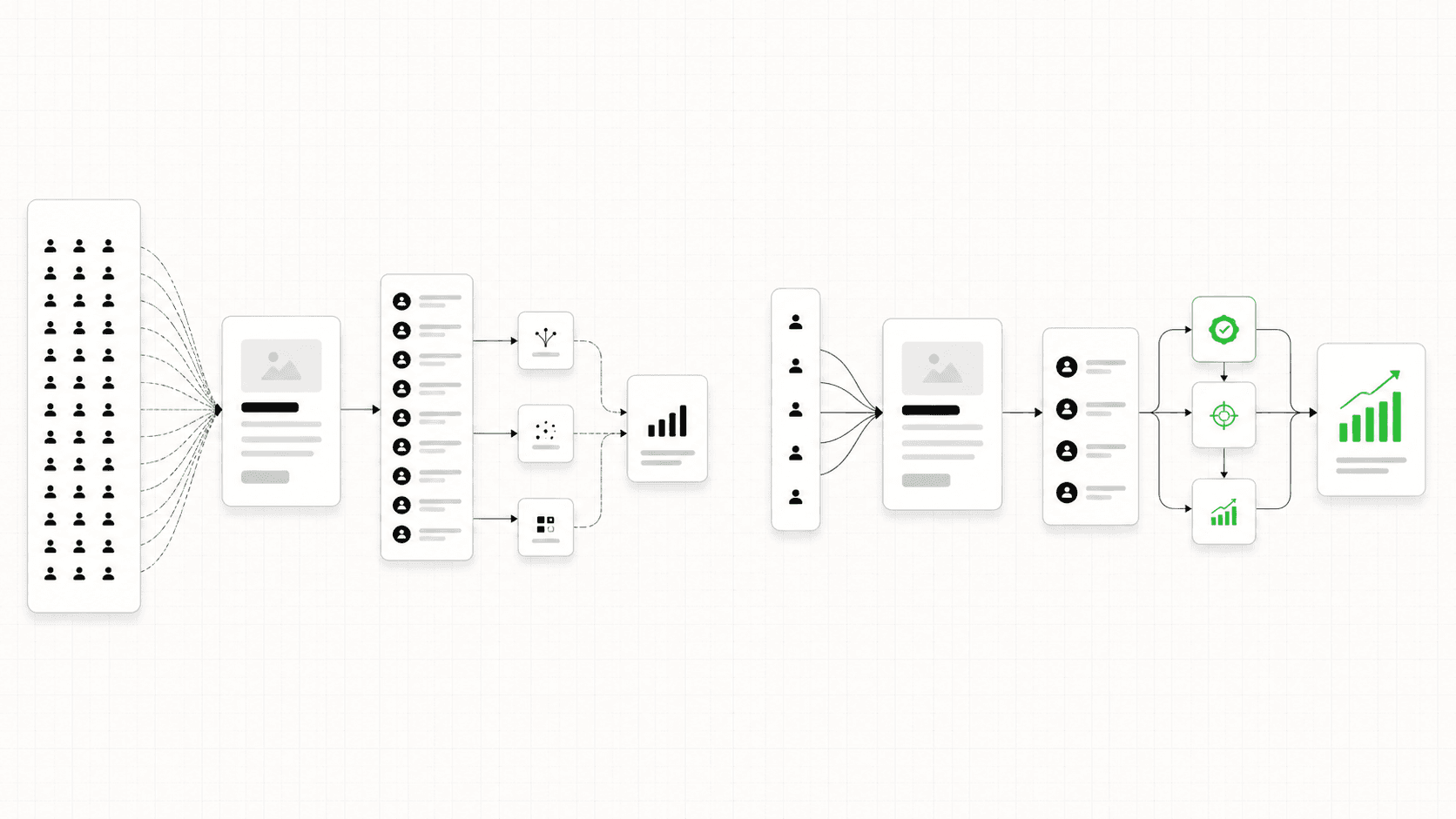
A page that converts at 12% but produces leads that close at 3% is generating volume without value. The cost per qualified lead is high. The sales team is spending time on conversations that go nowhere. The conversion rate looks impressive in the marketing report and does not show up in the revenue report.
A page that converts at 4% but produces leads that close at 35% is a fundamentally different commercial asset. The same traffic produces dramatically more revenue through a page with a lower headline conversion rate.
This means that some conversion rate optimization interventions are actually counterproductive for the business even when they improve the metric. Making a form shorter to increase submission volume, removing qualification questions that reduce conversion friction, or broadening the messaging to appeal to a wider audience can all increase conversion rate while reducing lead quality.
The right optimization target is conversion rate of the right visitors, not conversion rate of all visitors. Keeping that distinction visible throughout the optimization process is what separates work that improves the business from work that improves the metric. The full argument on conversion rate and what it actually means is here: What Is a Good Conversion Rate for a Landing Page?
What to Fix Before Running Any Tests
A/B testing is a useful tool for optimizing a page that is working at a reasonable level. It is not a useful tool for fixing a page with fundamental problems.
If the headline is vague, the proof is generic, the CTA is mismatched to visitor readiness, and the messaging does not speak to the target buyer's specific situation, running split tests on button text and hero image variants is not optimization. It is activity that looks like optimization while the actual problems remain untouched.
The test for whether a page is ready for A/B testing is whether the fundamentals are solid. Does the page speak clearly to the right visitor? Does it make a specific argument rather than a generic one? Does the proof address the actual doubts the target buyer carries? Is the CTA asking for an appropriate level of commitment?
If the answer to any of those is no, fix those things first. The lift from getting the fundamentals right is almost always larger than any incremental improvement achievable through testing on top of a broken foundation. And once the fundamentals are solid, the tests run on top of them have a much higher probability of producing meaningful results because the page is no longer losing visitors to problems the tests cannot address.
The Role of Traffic Quality in Conversion Rate
Conversion rate is partly a page problem and partly a traffic problem. Separating those two clearly is essential before making decisions about where to focus the optimization effort.
A page converting at 2% on highly targeted, warm traffic is underperforming. A page converting at 2% on broad, cold, poorly targeted traffic may actually be doing reasonably well given the input. The number alone does not tell you which situation you are in.
Before attributing a low conversion rate entirely to the page, it is worth looking at where the traffic is coming from and how well it matches the visitor the page was built for. If organic search traffic is sending people who searched for terms that are adjacent to but not exactly the problem the page addresses, the page will underperform relative to traffic that is a precise match. The fix in that situation is traffic quality, not page optimization.
If paid traffic is converting at 0.8% and organic is converting at 6%, the page is probably not the problem. The targeting or the ad-to-page message match is the problem. Spending optimization effort on the page in that situation is solving the wrong thing.
Segmenting conversion rate by traffic source before drawing any conclusions about the page is one of the simplest and most commonly skipped steps in conversion analysis.
The Practical Sequence for Improving Conversion Rate
Given everything above, here is the sequence that produces the best results most reliably.
Start with diagnosis, not intervention. Identify where in the page or funnel the breakdown is happening. Is it in the first screen, before the visitor has engaged with the argument at all? Is it in the middle of the page, where the argument loses momentum? Is it at the CTA, where an unresolved question or a mismatched ask is creating friction? Each of those has a different fix and treating them the same wastes effort.
Segment the data by traffic source before drawing conclusions about the page. Confirm that the underperformance is a page problem before treating it as one.
Fix the fundamentals before running tests. Messaging specificity, proof quality and placement, objection handling, CTA appropriateness. These are strategic decisions, not test variants. Get them right before introducing testing complexity.
Make one significant change at a time where possible. Multiple simultaneous changes produce results that cannot be attributed to any specific intervention. If the headline, the proof section, and the CTA all change in the same week and conversion improves, knowing which change drove the improvement requires starting over.
Measure past the conversion event. Track lead quality, sales qualified rate, and close rate alongside conversion rate. This prevents optimizations that improve the metric while hurting the business.
The Short Version
Meaningful conversion rate improvements come from identifying the specific breakdown point and fixing that specific thing, not from applying a generic list of optimization tactics to a page that may have fundamental problems those tactics cannot address.
The highest-leverage interventions are almost always in the first screen, the messaging specificity, the proof quality and placement, and the objection handling in the copy. Design changes and CTA tweaks produce smaller and less reliable lifts when the fundamentals are not right.
Diagnose before you intervene. Fix the foundation before you test. Measure past the conversion event.
That sequence produces results. The alternative mostly produces activity.
Keep reading