Landing Page Agency: What to Look For, What to Avoid, and How to Choose Right

@nadolconverts
Kacper Nadol
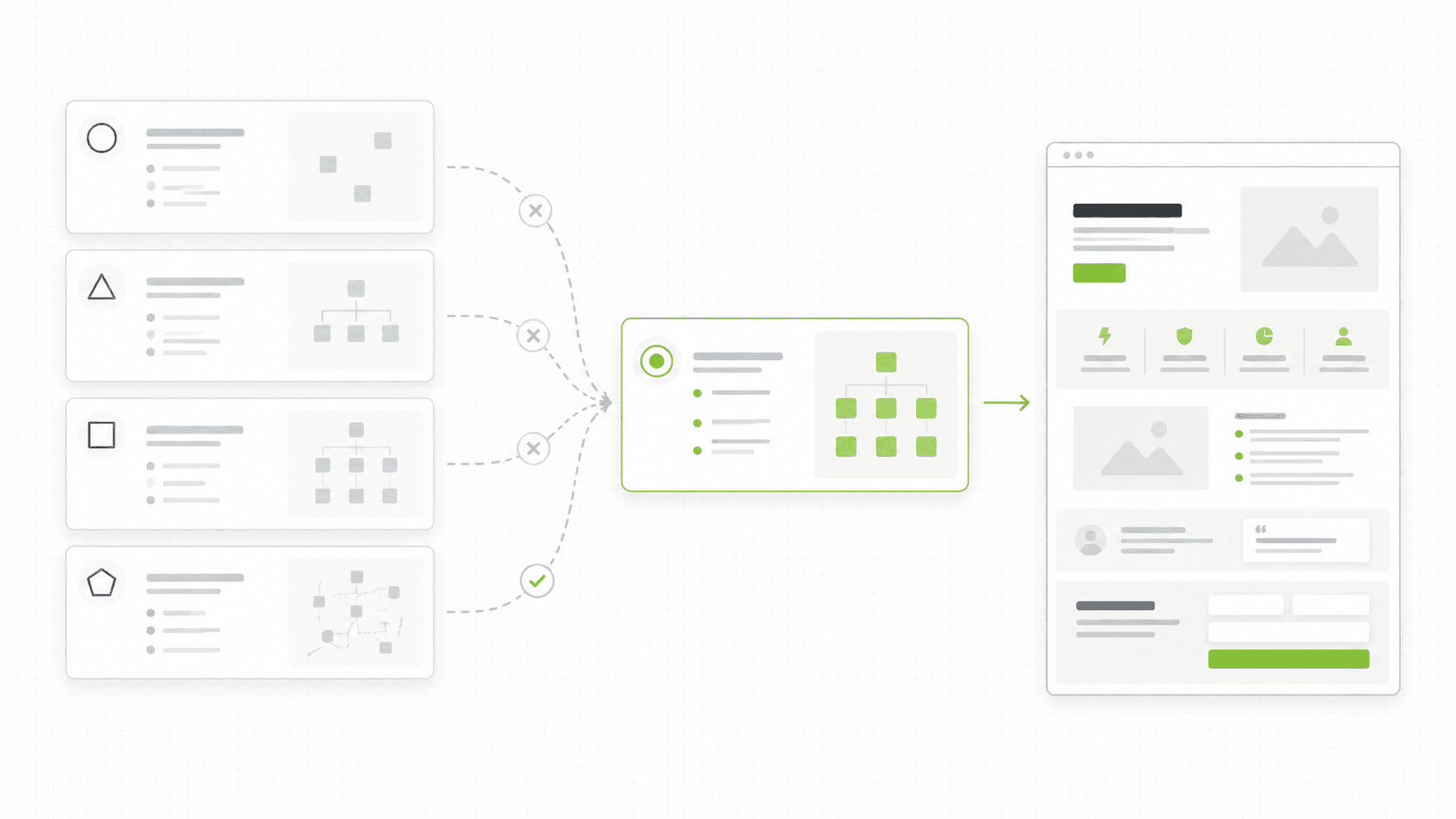
Hiring a landing page agency sounds straightforward until you start looking. The market is full of studios that produce beautiful pages that do not convert and freelancers who promise results they cannot deliver. This article is a practical guide to choosing the right partner for the right reasons.
Why This Decision Is Easy to Get Wrong
The landing page agency market is genuinely hard to navigate. There are thousands of studios, freelancers, and full-service agencies all offering some version of the same thing. The websites look similar. The case studies are curated to show the best possible outcomes. The proposals are written to sound thorough and professional regardless of whether the thinking behind them is any good.
The result is that most companies making this decision end up choosing based on one of three things: price, portfolio aesthetics, or a recommendation from someone who hired the studio for a completely different kind of project. None of those are reliable signals for whether a given agency will actually improve your conversion rate.
The companies that make this decision well tend to ask different questions. Not "do their pages look good" but "do their pages produce measurable results for businesses like mine." Not "is their proposal comprehensive" but "does the process they are describing actually address the specific problem I have." The difference between those two sets of questions is the difference between buying a nice-looking page and buying a page that converts.
What a Landing Page Agency Actually Does
Before evaluating anyone, it helps to be precise about what you are buying.
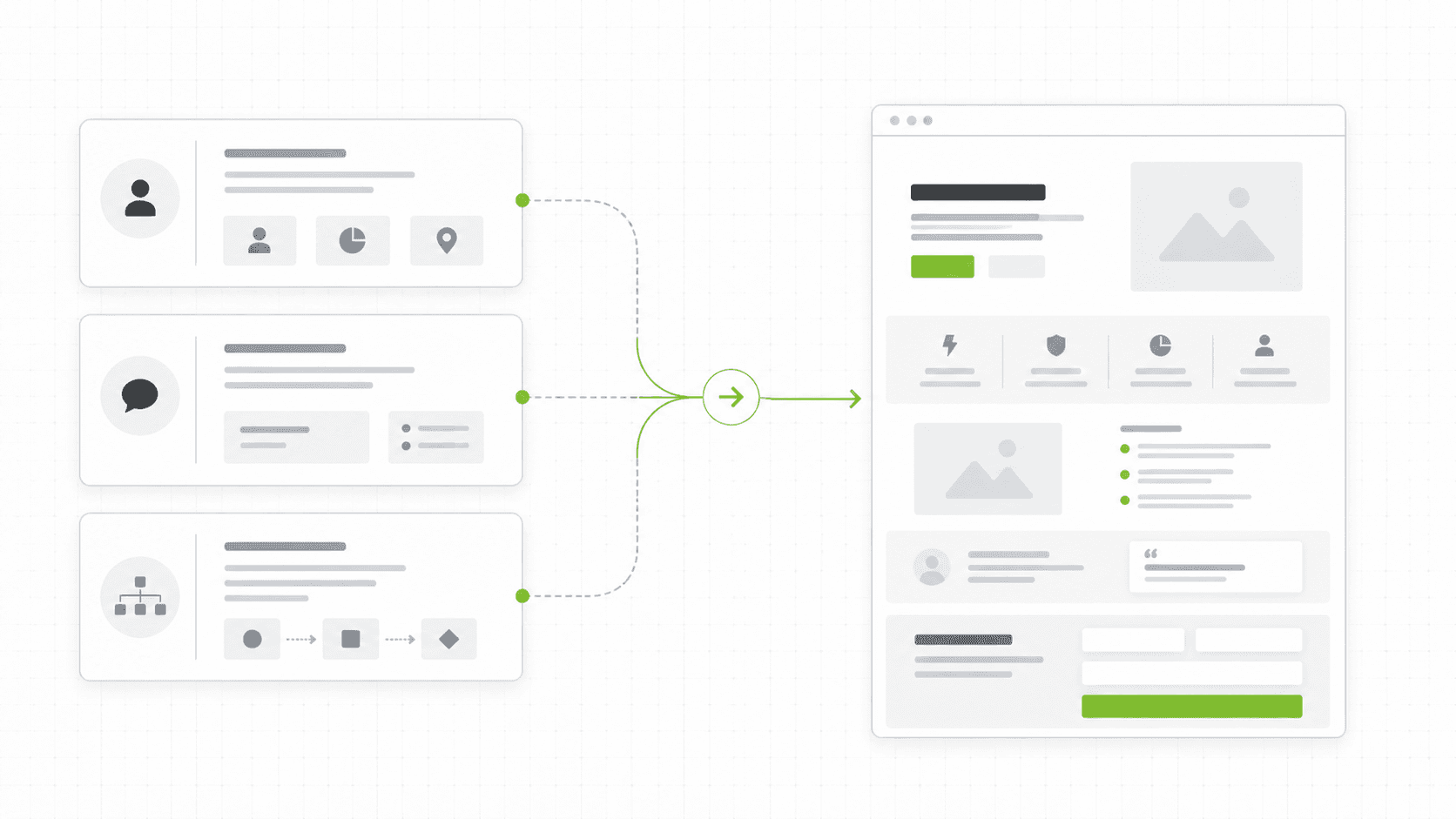
A landing page is not a design deliverable. It is a commercial argument made visual. The job of the agency or studio you hire is not to produce something that looks impressive in a portfolio. It is to produce something that moves a specific visitor from uncertainty to action at a measurable rate.
That job requires a combination of skills that most agencies only partially have.
It requires strategic thinking about the buyer: who they are, what they believe, what they are skeptical about, what would actually move them. It requires copywriting that is specific, structured, and built around conversion logic rather than brand voice. It requires design that creates the right hierarchy rather than just visual appeal. And it requires development that does not get in the way of any of the above.
Most agencies are strong in one or two of these areas and weak in the others. A studio known for beautiful design may have no real conversion thinking behind the pages they build. A copy-first agency may produce pages that read well but look like an afterthought. Understanding which combination of skills your specific project actually needs is the starting point for evaluating anyone. The full breakdown of what goes into a landing page that actually converts is here: Landing Page Copywriting: What Actually Makes It Convert
The Questions Worth Asking Before You Hire Anyone
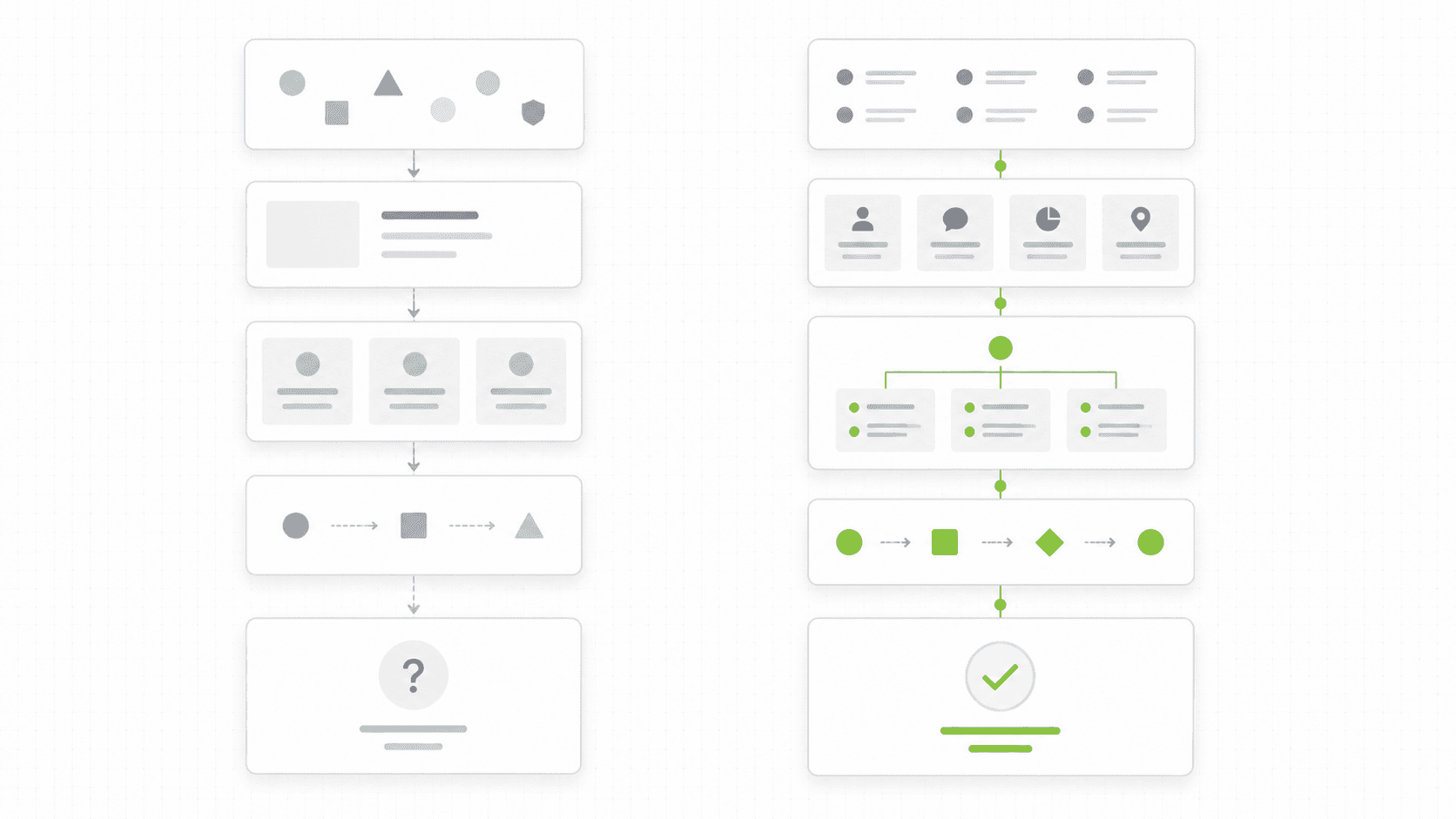
Most agency evaluation processes focus on the wrong things. Reviewing portfolios, comparing pricing, asking about timelines and deliverables. These matter, but they are not where the real signal is.
The questions that reveal whether an agency actually understands conversion are simpler and more direct.
"Walk me through how you approach the messaging for a new landing page."
A studio that leads with design will talk about visual references and brand direction. A studio that understands conversion will talk about the buyer first. Who is landing on this page, what do they already believe, what are they skeptical about, and what would actually shift them. If the answer does not include the buyer as the starting point, that is important information.
"What has been your most successful landing page in terms of measurable results, and why do you think it worked?"
This question reveals whether the agency thinks in terms of outcomes rather than outputs. An agency that can answer specifically, naming the metric that moved, the specific change that drove it, and the logic behind that change, is an agency that understands conversion. An agency that talks about design quality and client satisfaction is telling you what they optimize for.
"How do you handle a situation where the page underperforms after launch?"
The answer to this question separates agencies that are accountable for results from agencies that are accountable for deliverables. A deliverable-focused agency considers the project complete when the page goes live. A results-focused agency has a view on what happens next.
"What do you need from us before starting, and why?"
The brief process is one of the clearest signals of how seriously an agency takes the strategic side of the work. An agency that asks for brand guidelines and a list of features to communicate is executing. An agency that asks for customer research, sales call insights, competitive context, and specific conversion goals is thinking. What a proper brief should include and why it matters is covered in detail here: How to Write a Landing Page Brief That Actually Gets You a Converting Page
Red Flags Worth Knowing Before You Start Looking
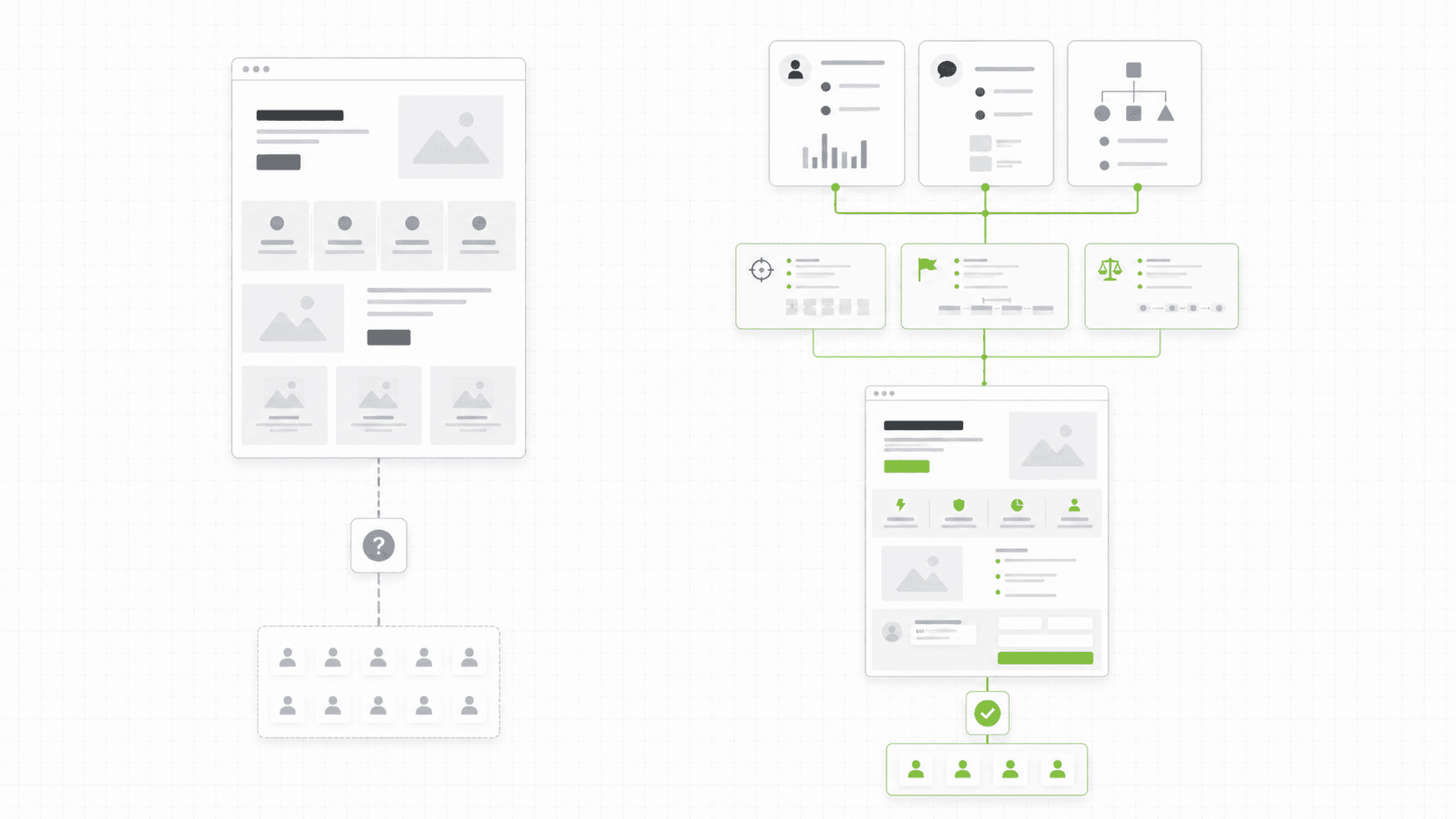
There are patterns that consistently show up with agencies that produce work which looks good but does not convert. Knowing them in advance saves a significant amount of time and money.
They lead every conversation with design.
If the first thing an agency shows you is their visual portfolio and the first questions they ask are about brand direction and visual references, design is what they are selling. Design is necessary but it is not sufficient for conversion. An agency that leads with design is almost certainly not leading with conversion thinking.
They cannot explain why their pages work.
Ask any agency to explain the strategic logic behind one of their case study pages. Why is the hero structured that way? Why is that proof element placed there rather than somewhere else? Why does the CTA say what it says? If they cannot answer those questions in terms of buyer psychology and conversion logic, the page was designed by instinct rather than strategy. That instinct might produce good results occasionally. It will not produce them reliably.
Their case studies show before-and-after aesthetics but no performance data.
Before and after screenshots are a portfolio tool, not a results tool. If an agency's case studies show how the page looks now compared to how it looked before but do not show what happened to the conversion rate, lead volume, or cost per acquisition, the agency is not confident in its results. That is worth noticing.
They propose a retainer before diagnosing the problem.
An agency that recommends a long-term engagement before understanding what is actually wrong with your current page is optimizing for its own revenue, not for your conversion rate. The right structure for most projects is a clear diagnostic phase followed by targeted work, not a six-month retainer that keeps going regardless of results. This is exactly the point we made in the CRO agency vs DIY article: CRO Agency vs Doing It Yourself: How to Actually Make the Right Call
They have no view on copy.
If an agency treats copywriting as the client's responsibility or as an afterthought that gets filled in after the design is done, they do not understand how landing pages actually work. Copy is the argument. Design is the presentation. An agency that gets this backwards will produce presentations without arguments.
What the Right Agency Looks Like
The positive signals are worth naming too, because they are less visible than the red flags but more reliable as indicators of actual quality.
They ask about your buyer before they ask about your brand. The first conversations are about who lands on the page, what problem they have, what they need to believe before they will convert. Design comes after that understanding is established.
They have a defined process for the strategic work that happens before any design begins. Messaging exploration, hierarchy decisions, proof strategy. These are not extras. They are the foundation.
They can point to specific results from specific projects and explain the mechanism behind those results. Not just "we redesigned the page and conversion improved" but "we identified that the hero was failing to establish relevance for the target visitor within the first five seconds, rewrote it around the specific outcome the buyer cared about, and the conversion rate moved from X to Y."
They are honest about what they do not do well. No agency is excellent at everything. The ones worth trusting know their strengths and say so clearly rather than claiming to be full-service across every discipline.
They treat the brief as a strategic document, not a formality. They push back on thin briefs. They ask for more context. They want to understand the commercial situation before committing to a solution.
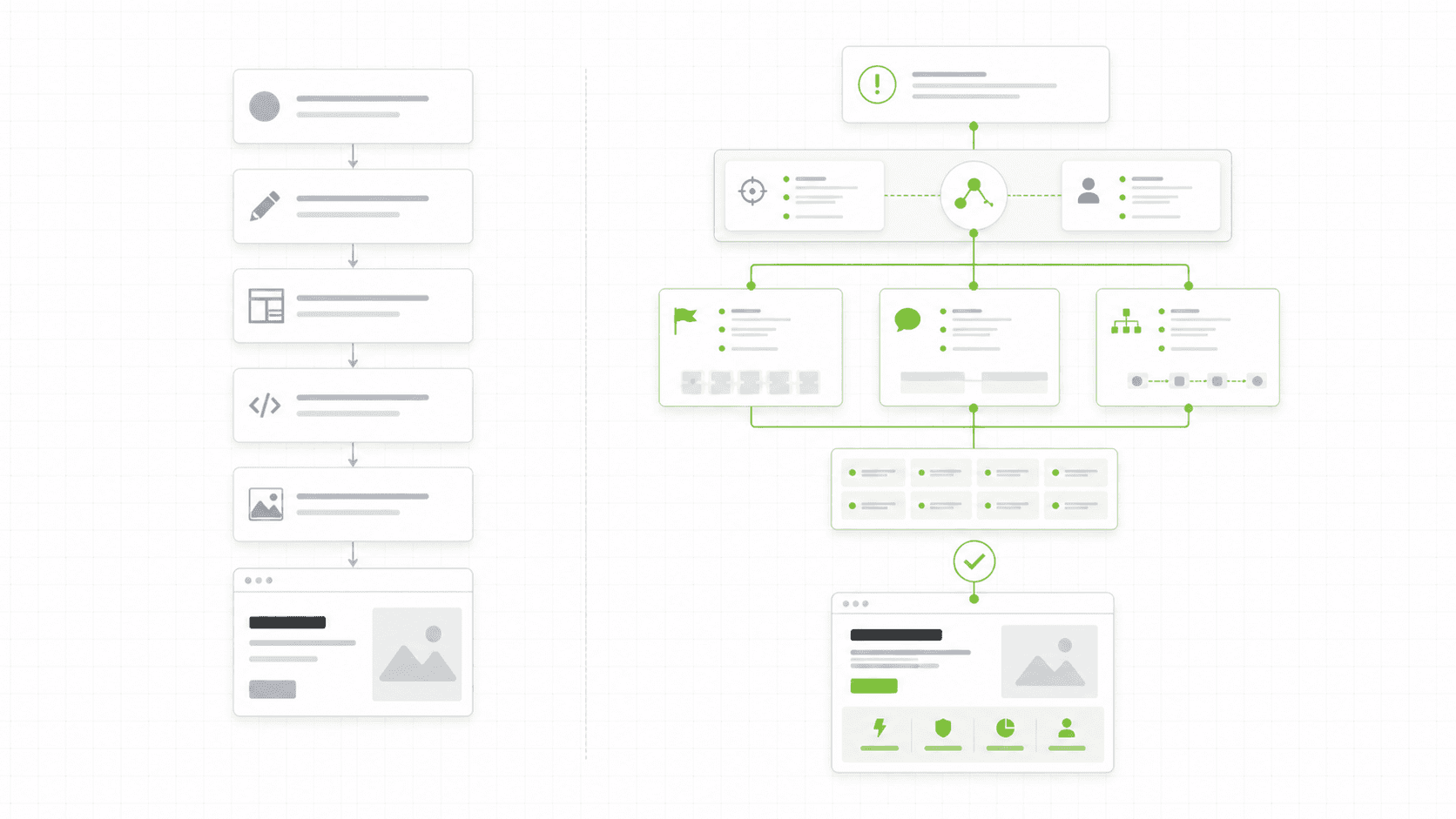
The Difference Between a Landing Page Agency and a Conversion Studio
This distinction is worth making because it describes two genuinely different products sold under similar labels.
A landing page agency in the traditional sense is a production operation. It builds pages efficiently, maintains design quality, and delivers on time and on budget. The output is a page. What the page does commercially is largely determined by the brief it receives.
A conversion studio is a different kind of operation. It starts from a commercial problem rather than a production brief. It brings strategic thinking to the messaging, the structure, the proof strategy, and the conversion architecture before any design work begins. The output is still a page, but the page is the result of a process designed to produce a specific commercial outcome.
Most companies say they want the second thing. Most budgets and timelines are calibrated for the first thing. Being honest about which one you are actually buying, and which one your situation actually needs, is worth doing before you sign anything.
Before You Brief Anyone
If you are about to approach agencies for a landing page project, the most valuable thing you can do before any conversation is get a clear picture of what is actually wrong with your current page, or what the new page needs to accomplish that a templated approach will not achieve.
That clarity changes the quality of every agency conversation that follows. It allows you to evaluate proposals against a specific standard rather than a vague brief. It tells you quickly whether the agency is responding to your actual problem or proposing their standard solution to a generic version of it.
A structured audit is the fastest way to build that clarity before you start briefing. See how the 48h Audit works
The Short Version
The right landing page agency leads with the buyer, not the design. It has a strategic process before any pixels are placed. It can explain why its pages work in terms of conversion logic rather than aesthetic quality. And it treats the brief as a foundation, not a formality.
The wrong agency produces pages that look like the portfolio rather than pages that solve your specific commercial problem.
The decision is easier to make well once you know what questions to ask.
Keep reading