Lead Generation Landing Page: What Makes It Actually Produce Leads

@nadolconverts
Kacper Nadol
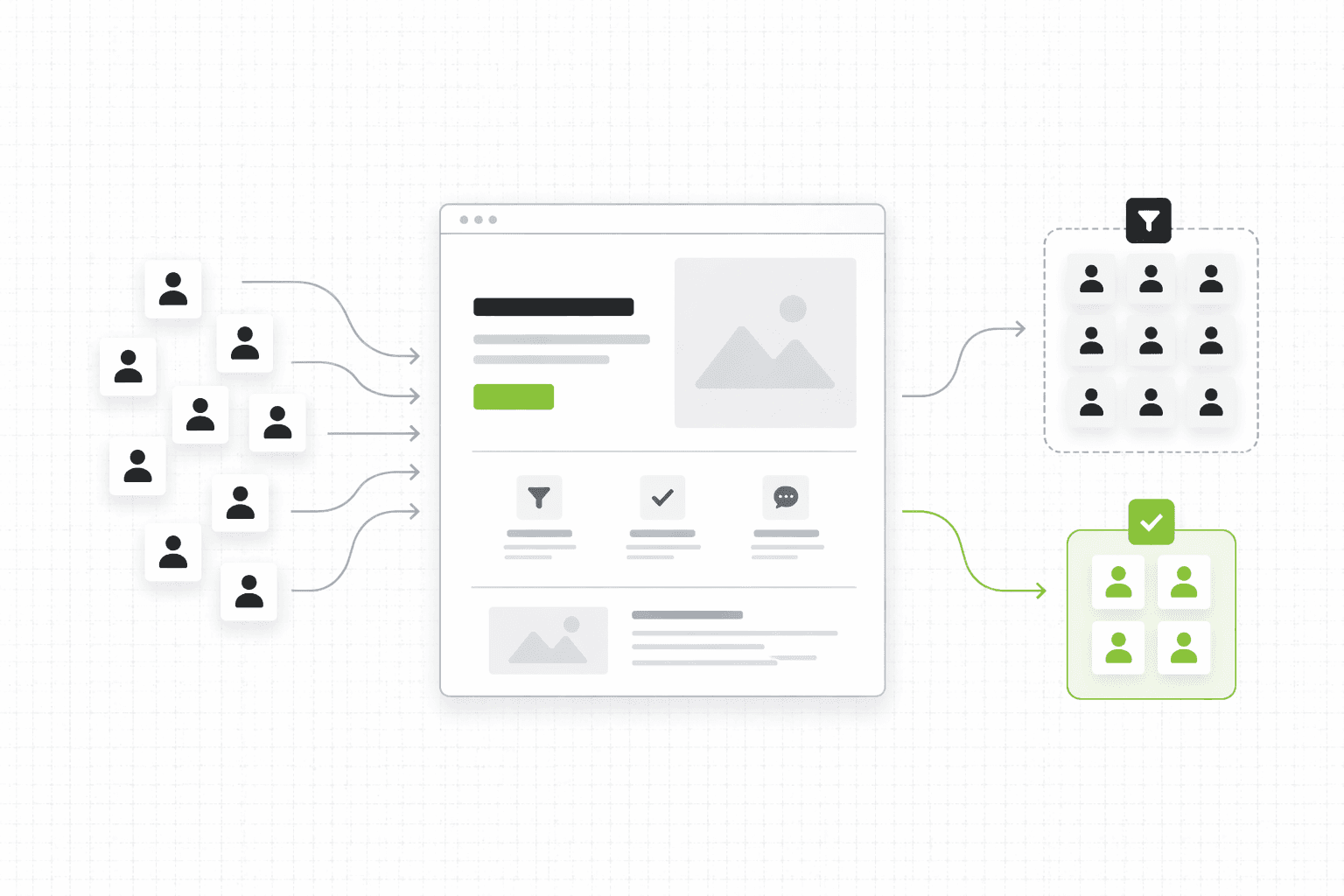
A lead generation landing page has one job: turn visitors into leads worth talking to. Most pages either convert too few visitors or convert the wrong ones. This article covers what separates a lead gen page that works from one that just exists, with no generic tips and no filler.
What a Lead Generation Landing Page Is Actually Trying to Do
The definition seems obvious. A lead generation landing page captures contact information from visitors so the business can follow up. Email address, name, maybe a phone number or company name depending on the context.
But the obvious definition misses the part that actually matters: the quality of the leads it produces.
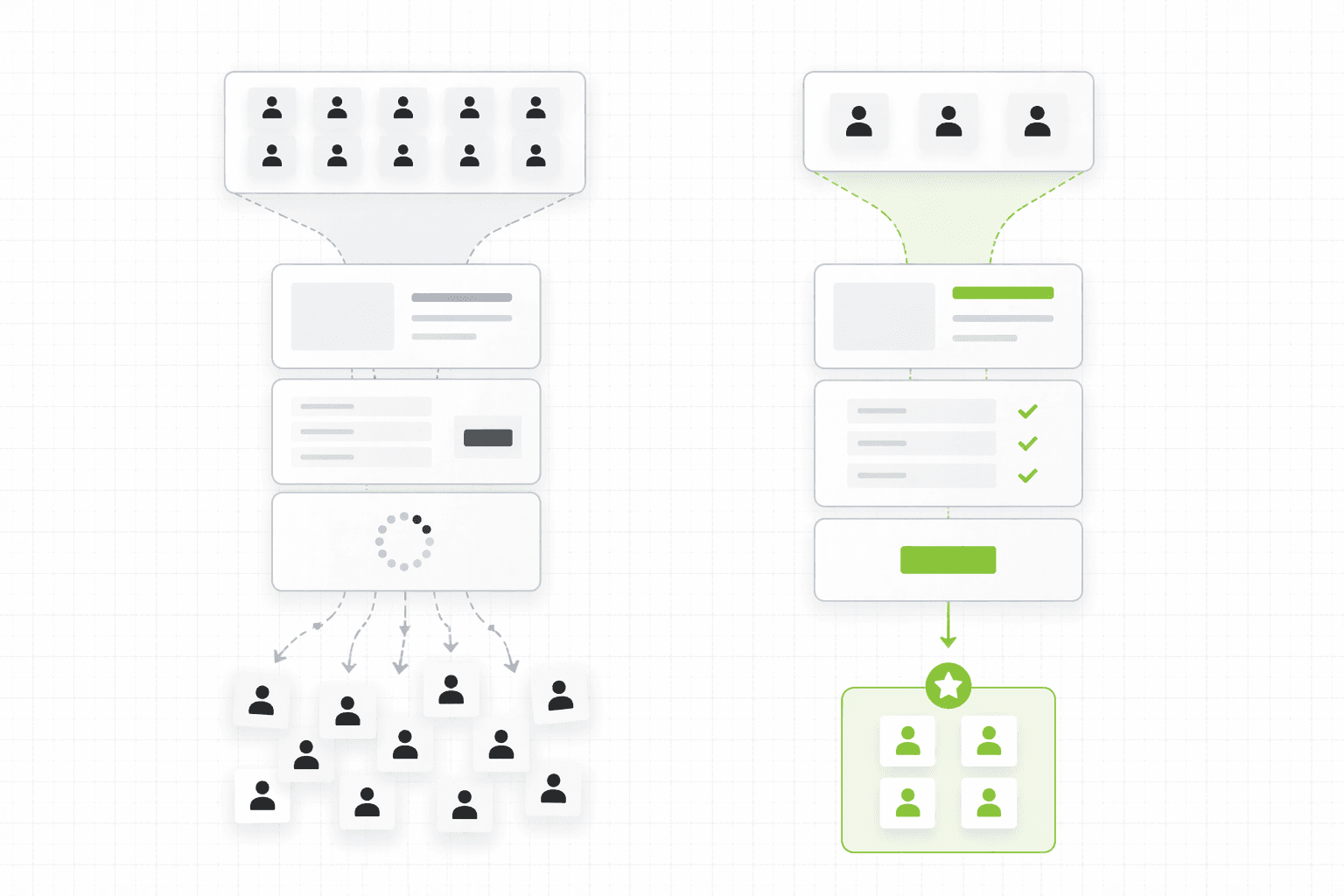
A page that converts 15% of visitors but produces leads that close at 2% is not a high-performing lead gen page. It is a page generating volume without value. The sales team wastes time on conversations that go nowhere. The cost per qualified lead is high even if the cost per lead looks cheap. And the marketing team gets credit for numbers that do not translate into revenue.
A page that converts 4% of visitors but produces leads that close at 30% is a fundamentally different asset. It is doing the qualification work on the page so the sales team can do the selling work on the call.
This distinction shapes every decision about how a lead generation landing page should be built. The goal is not the maximum number of form submissions. The goal is the maximum number of form submissions from people who are actually a fit. This is exactly the tension we unpacked in detail here: How to Qualify Leads on Your Website Without Killing Conversions
The Two Types of Lead Gen Pages and Why They Need Different Approaches
Not all lead generation landing pages are the same problem. There are two fundamentally different versions and confusing them produces pages that are optimized for the wrong thing.
The first is the top-of-funnel lead gen page. It is offering something in exchange for an email address. A guide, a checklist, a webinar registration, a free tool, a newsletter. The visitor is not necessarily ready to buy. They are interested in the topic and willing to exchange their contact details for access to something useful. The job of this page is to make the offer feel valuable enough to justify the exchange, and to attract the right kind of person rather than the largest possible volume.
The second is the bottom-of-funnel lead gen page. It is asking the visitor to raise their hand for a sales conversation, a quote, a consultation, or a more direct commercial engagement. The visitor landing on this page is further along in their decision process. They have a more specific problem, a more concrete need, and a higher level of intent. The page needs to justify the higher commitment of entering a sales process, which requires more trust-building and more specific proof than a top-of-funnel page.
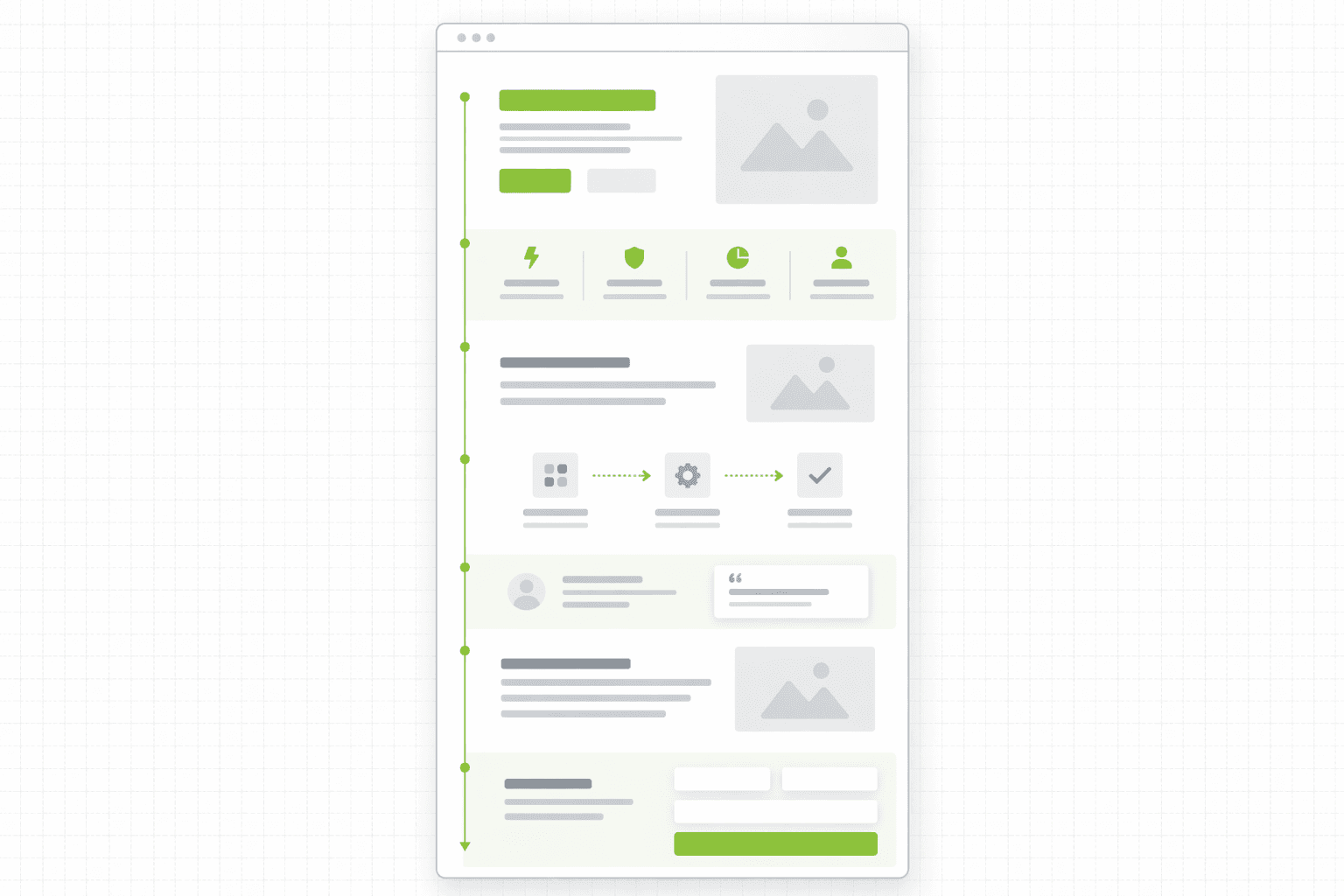
These two pages need different structures, different copy approaches, different proof strategies, and different form designs. A top-of-funnel page with a low-friction offer and a long form that asks for company size and job title is getting the balance wrong. A bottom-of-funnel page with no proof, no objection handling, and a vague CTA is leaving qualified leads on the table.
What the Offer Needs to Be
For top-of-funnel lead gen pages, the offer is the conversion mechanism. The form is not what converts. The offer is.
Most lead gen offers underperform because they are generic, low-effort, or misaligned with what the target visitor actually needs at that stage. A generic industry report that 40 other companies are also giving away. A checklist that takes ten minutes to produce and provides ten minutes of value. A webinar that is really a sales pitch in disguise.
The offers that convert well share a few characteristics. They are specific enough that the right person immediately understands the value. They solve a real, immediate problem the target visitor has right now. They deliver value before asking for anything more than contact details. And they are honest about what the visitor is getting, which builds the kind of trust that makes the follow-up sequence work.
A useful test for any lead gen offer: would the right person share this with a colleague who has the same problem? If the answer is yes, the offer is strong enough to convert and credible enough to start a relationship. If the answer is probably not, the offer needs more work before the page gets optimized.
The Form: How Much to Ask For and When
The form on a lead generation landing page is where most of the friction lives and most of the qualification happens. Getting the balance wrong in either direction costs leads.
Too short a form produces volume without qualification. An email address alone gives you almost no information about whether the person submitting it is worth following up with. For high-volume, low-ticket offers this is acceptable. For B2B businesses where a qualified lead is worth hundreds or thousands of dollars, it produces an inbox full of contacts that the sales team has to manually sort through.
Too long a form kills conversion. Every additional field reduces the percentage of visitors who complete it. Fields that feel intrusive, irrelevant, or premature create hesitation at exactly the moment you need momentum. A seven-field form asking for company revenue and team size before the visitor has been given any reason to trust you is asking for more than the relationship has earned at that point.
The right approach is to ask for what the business genuinely needs to qualify and follow up, and nothing more. In most B2B contexts, that is name, email, company name, and one qualification question that reveals whether the visitor is a realistic fit. That one question, framed as a natural part of the form rather than a screening mechanism, does the qualification work without adding friction that hurts volume unnecessarily.
For bottom-of-funnel pages where the visitor is requesting a consultation or a quote, longer forms are more acceptable because the higher intent of the visitor means they are willing to invest more effort. Even there, every field should be justified by genuine operational need rather than nice-to-have data collection.
Proof That Works on Lead Gen Pages
The proof required on a lead generation landing page is different from the proof required on a sales page, because the commitment being asked for is different.
On a top-of-funnel lead gen page, the visitor needs to believe the offer is worth their email address and the follow-up emails that will follow it. The relevant proof is evidence that the content is genuinely useful, that the company understands the topic, and that handing over an email address will not result in an aggressive sales sequence they cannot escape. Specific testimonials about the quality of past content, clear statements about email frequency and content, and transparency about what happens after sign-up all do this work.
On a bottom-of-funnel lead gen page, the visitor needs to believe the conversation they are about to enter is worth their time and that the company is the right one to have it with. The relevant proof here is results achieved for clients in similar situations, specific outcomes from past engagements, and credibility signals that establish expertise before the visitor has to commit to a call. The way proof should be placed strategically rather than decoratively is something we covered here: B2B Landing Page: What Makes It Actually Work
The Thank You Page Most Companies Ignore
The page a visitor sees after submitting the form is one of the most underused assets in a lead generation funnel. Most companies show a generic confirmation message and leave the visitor with no clear next step, no additional value, and no reason to engage further before the follow-up sequence begins.
A well-designed thank you page does three things. It confirms the submission and sets clear expectations about what happens next. It delivers immediate value in some form, whether that is the promised content, a relevant article, or a short video that deepens the relationship while the visitor is still engaged. And it offers an optional next step for visitors who are ready to move faster, whether that is booking a call directly, exploring a case study, or connecting on another channel.
The visitor who just submitted a form is the most engaged they have been at any point in their relationship with the business. The thank you page is the moment to build on that engagement rather than letting it dissipate in a generic confirmation screen.
Why Traffic Is Almost Never the Real Problem
When a lead generation landing page is not producing leads, the instinct is to send more traffic to it. More ad spend, more content, more social promotion. The assumption is that volume will eventually produce conversions.
This works sometimes. It masks the real problem more often.
If a page converts at 2% and the target is 5%, sending twice the traffic produces twice the leads but at a cost-per-lead that makes the economics increasingly difficult. The better intervention is fixing the page to convert at 5%, which produces the same improvement in lead volume without increasing traffic spend at all. This is the core argument we made in the article on improving conversion rate without more traffic: How to Improve Website Conversion Rate Without More Traffic
Before investing in more traffic, it is worth being precise about whether the page itself is the constraint. A structured audit of the page will tell you whether the problem is in the offer, the messaging, the form, the proof, or the CTA, and which of those is costing the most conversions. That diagnosis is almost always faster and cheaper than the traffic spend required to brute-force past a page that is underperforming.
The Checklist Before You Launch
Before sending traffic to a lead generation landing page, it is worth running through a short set of questions that catch the most common failure points before they cost you conversions.
Is the offer specific enough that the right person would immediately understand the value? Is the headline speaking to the visitor's situation rather than the company's capabilities? Is the form asking for what the business needs and nothing more? Is there enough proof to justify the commitment being asked for? Is the CTA copy specific about what happens next after clicking? Is the thank you page doing anything useful?
If the answer to any of those is no or maybe, that is the thing to fix before the page goes live. Launching with a known weakness and planning to fix it later is one of the most reliable ways to waste the early traffic that tends to be the most valuable for establishing a conversion baseline.
If you are not sure which of those questions your current page is failing, a focused audit maps the specific breakdown points before any rewriting or rebuilding begins. See how the 48h Audit works
The Short Version
A lead generation landing page works when the offer is specific and genuinely valuable, the messaging speaks directly to the right visitor's situation, the form asks for what is needed and nothing more, the proof justifies the commitment being asked for, and the thank you page treats post-conversion engagement as an opportunity rather than an afterthought.
It fails when it optimizes for volume over quality, uses a generic offer no one would miss, asks for too much too soon, or treats the form submission as the end of the job rather than the beginning of the relationship.
The goal is not leads. It is the right leads.
Keep reading